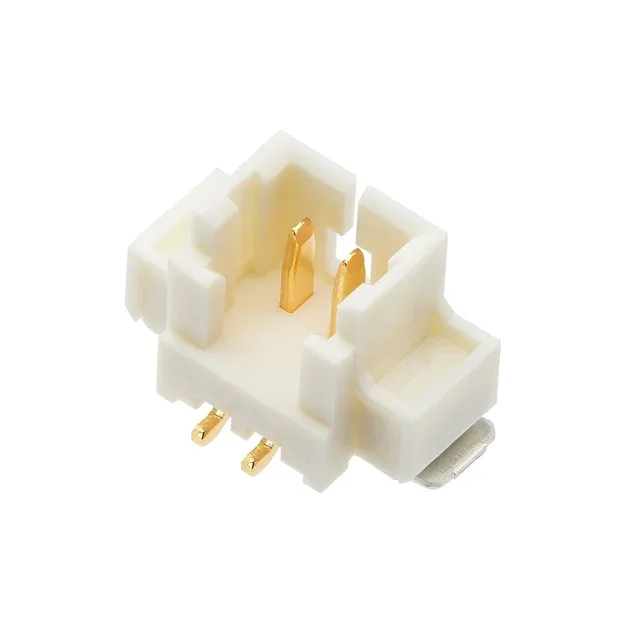
The 0533984002: For a 2-position header, the keep-out zone is minimal, but the pitch also limits the wire gauge the mating crimp housing can accept; the PicoBlade system typically handles 26-30 AWG, so plan the harness accordingly.
For applications that need thousands of cycles, a thicker gold plating (15 µinch or more) would be specified; here the flash keeps cost down while still protecting the phosphor bronze base material from oxidation in non-aggressive environments.
Detent Lock and 3-Wall Shroud — Vibration Resistance Without a Secondary Latch
The detent lock engages with an audible click when the mating receptacle is fully seated, and the 3-wall shroud protects the male blades from being bent or shorted during handling. In a low-vibration environment like a control cabinet or consumer appliance, the detent alone is sufficient to keep the pair mated. For high-vibration automotive or industrial applications, the PicoBlade system does not include a secondary lock; the connection relies on the detent and the friction of the terminal interface. The shroud also provides keying — the mating housing is polarized to prevent reverse insertion.
SMT Solder Retention for Reflow Assembly
The header includes solder retention features — small tabs on the SMT tails that hold the component in place during reflow and provide additional mechanical strength after soldering. This is important for a board-edge connector where the cable assembly will exert shear force on the solder joints.