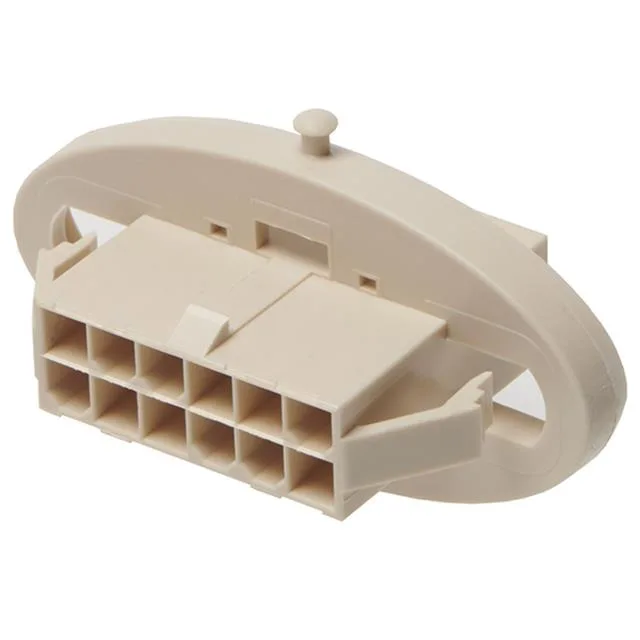
It is a sealed, panel-mount, snap-in housing with a locking ramp, designed for wire-to-board and wire-to-wire power interconnects where moisture or dust ingress is a concern. The 4.20mm pitch and matching row spacing give it the same board footprint as standard Mini-Fit, but the integrated seal and locking ramp target applications that need vibration resistance and environmental protection — think underhood automotive, industrial control cabinets, and outdoor power distribution.
The 6 positions in a dual-row layout mean this housing accepts three circuits per row, matching a 6-circuit BOM line.
Sealed Construction and What It Means
The 'Sealed' feature on this housing means the mating interface includes a gasket or integrated seal — not just a shroud. When mated with the corresponding Mini-Fit Sigma receptacle header and fitted with the correct crimp terminals and seals, the assembly resists splash and dust ingress. This is not an IP67-rated submersible connector, but it handles washdown and engine-compartment moisture better than the unsealed standard Mini-Fit.
This is a crimp-termination housing — you select the female socket terminal separately, crimp it to the wire, and insert it into the housing. The panel mount, snap-in feature secures the housing to a panel cutout before wiring.
Mini-Fit vs Mini-Fit Sigma — What Changed
The core difference between standard Mini-Fit and Mini-Fit Sigma is the sealing and the locking mechanism. Standard Mini-Fit uses a center latch; Sigma uses a locking ramp that pulls the housings together and compresses the seal. The pitch (4.20mm), circuit counts, and terminal family are shared, so a Sigma plug housing like 2070170006 mates with a Sigma header, not a standard Mini-Fit header — the locking ramp geometry is different. If your application needs the seal and vibration lock, Sigma is the pick; if not, the standard Mini-Fit saves cost.