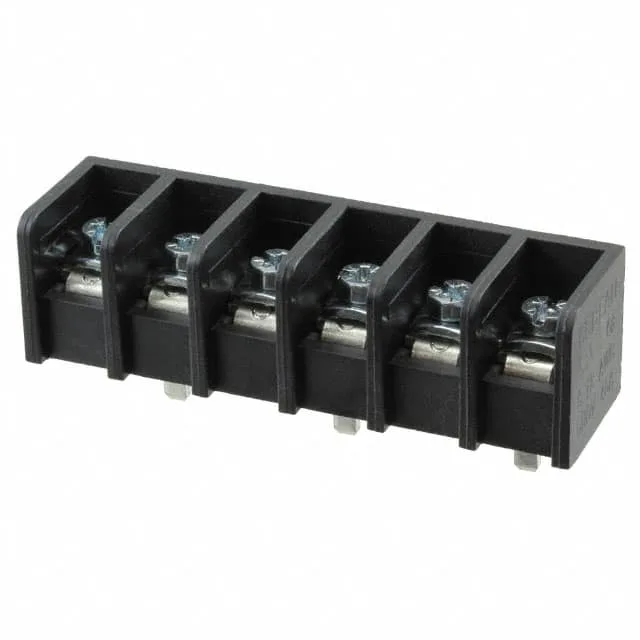
Molex Beau 38660 386608806, 6-Circuit Barrier Strip, 45A
MPN386608806
Active
Molex Beau 38660 barrier strip terminal block, 386608806, 6 circuits, 0.500" (12.70mm) pitch, 45A, 600V, through hole, PC pin bottom termination, screws with captive plate, black PBT housing, 8-18 AWG.
$10.13Ref. price · indicative, final on quote
RoHSROHS3 Compliant
SeriesBeau 38660
Source DocumentedChannel stated on listing & quote
Condition PhotosReal unit photos / video on request
WhatsApp AnswersFast human replies for stock & sourcing questions
Worldwide DispatchDHL/FedEx — transit quoted per order
Independent China distributor & sourcing agent· Listing updated Jul 2026
Specifications
| Parameter | Value |
|---|---|
| Series | Beau 38660 |
| Barrier type | 3 Wall (Tri) |
| Mounting | Through Hole |
| Terminal block type | Barrier Block |
| Voltage rating | 600V |
| Current rating | 45A |
| Wire gauge | 8-18 AWG |
| Terminal screw finish | Zinc, Yellow Chromate |
| Number of wire entries | 6 |
| Terminal screw material | Steel |
| Operating temperature | -40°C ~ 110°C |
| Color | Black |
All specifications
| Parameter | Value |
|---|---|
| Material - insulation | Polybutylene Terephthalate (PBT) |
| Pitch | 0.500\" (12.70mm) |
| Package | Tray |
| Rows | 1 |
| Top termination | Screws with Captive Plate |
| Bottom termination | PC Pin |
| Number of circuits | 6 |
Frequently asked questions
What wire gauge does the 386608806 accept?
It accepts 8-18 AWG wire through the screws with captive plate top termination. The pressure plate clamps the conductor without damaging it.