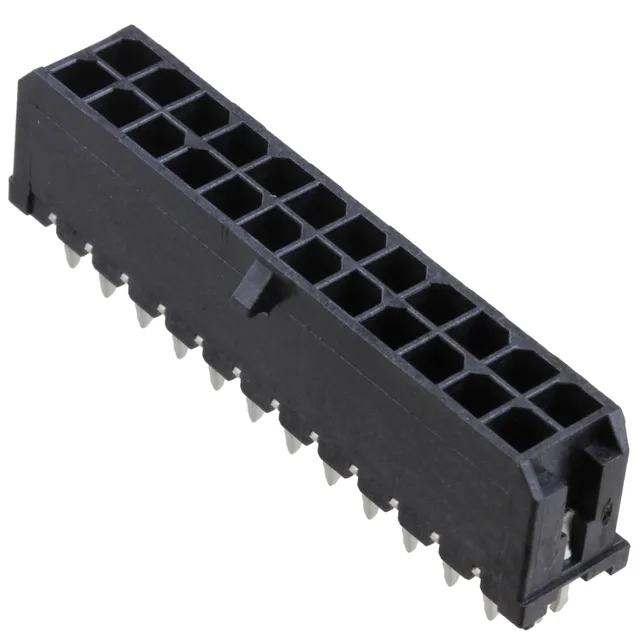
The Molex 430452426 is a 24-position, dual-row header from the Micro-Fit 3.0 43045 series. It's a board-to-cable/wire interconnect — a through-hole vertical header that mates with the matching Micro-Fit 3.0 receptacle housing and crimp terminals. The 3.00 mm pitch and 8 A per circuit rating put it in the moderate-power class: it handles DC rails and moderate loads, not just signal lines. Gold on the mating interface (30.0 µinch) and tin on the solder post (100.0 µinch) — the gold gives you repeated mating cycles without corrosion, the tin is for a reliable solder joint.
The -40°C to 105°C operating range and UL94 V-0 housing back that up — it's at home in an engine bay, an industrial cabinet, or a medical device enclosure. The locking ramp and board lock mean it stays put under vibration, which is why you see Micro-Fit 3.0 in harness assemblies for power distribution and control systems.
The 8 A per circuit at 600 V is the headline — at 3.00 mm pitch, that's enough creepage for the voltage without forcing an oversized board footprint.
This header mates with the Micro-Fit 3.0 receptacle housing (e.g., the 43025 series) using the matching crimp terminals (43030 or 45750 series for 20-24 AWG). The through-hole termination is straightforward: kinked solder pins insert into a 3.00 mm pitch PCB layout, and the board lock holds it during soldering. No press-fit tooling needed.