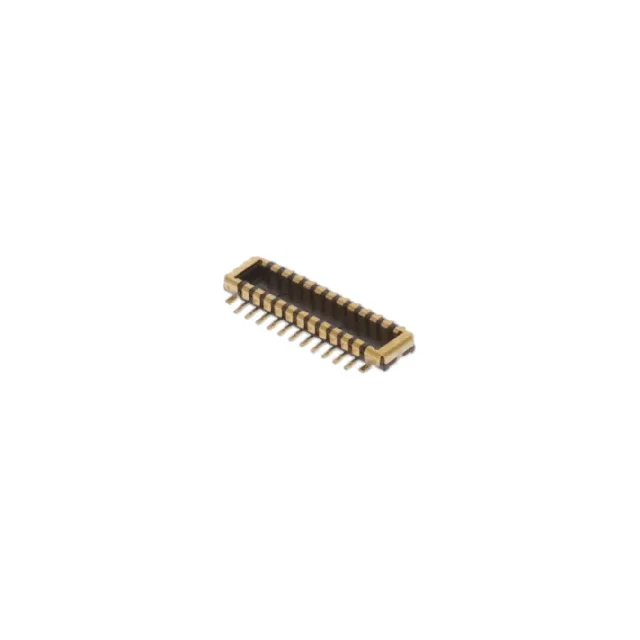
0.35 mm Pitch, 22-Position Plug for Tight Mezzanine Stacking
At a 0.014" (0.35 mm) pitch, this connector packs 22 circuits into a compact footprint, making it suited for handheld devices, wearables, and other space-constrained electronics where every millimeter of board real estate counts. The mated stacking height of 0.6 mm, combined with a height above board of 0.019" (0.48 mm), defines the z-axis clearance between parallel PCBs — a critical dimension when specifying the board spacing in a stacked assembly. The plug uses outer shroud contacts, meaning the male contacts are recessed within a plastic shroud that guides alignment during mating and protects the contacts from damage before assembly. Surface-mount termination, combined with pick-and-place features and solder retention, confirms the part is engineered for automated SMT assembly lines.
Board Layout: Pitch and Stack Height Drive the Footprint
This pitch demands precise PCB trace routing between pads — typically requiring a controlled impedance stack-up and fine-line etching capability. The two-row arrangement with 22 positions means 11 contacts per row, with the rows offset to maximize routing channel escape. The 0.6 mm mated stack height sets the z-height budget: the receptacle and plug together occupy just over half a millimeter between boards, which is typical for ultra-slim portable product designs. The surface-mount pads must match the recommended footprint in the product drawing. The solder retention features add mechanical hold during reflow, but the connector itself does not carry board locks — the primary retention comes from the solder joints after reflow. For vibration-prone environments, confirm the application's shock and vibration profile against the connector's rated capability.