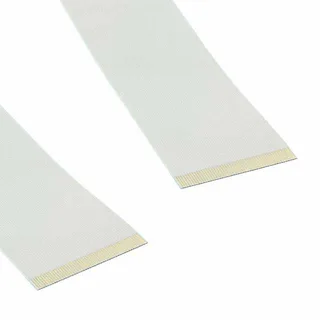
150200537
Molex
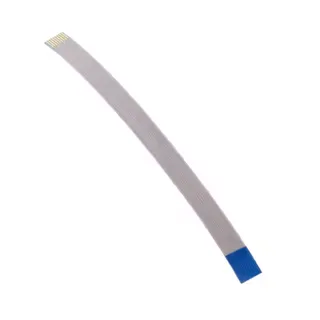
2.000\" (50.80mm)Premo-Flex 15020Bag
Ref. price$6.19
Lead time on requestGet quote ›
384 variants · Molex
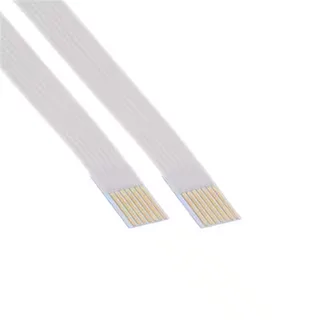
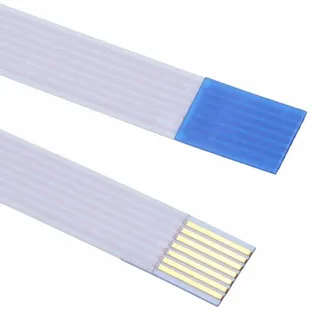
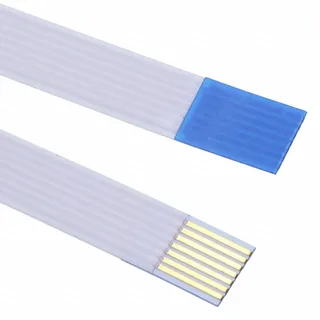
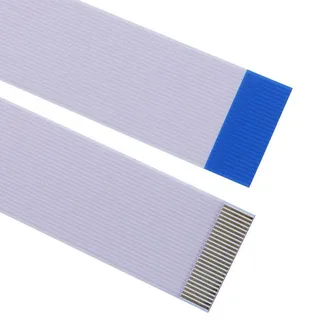
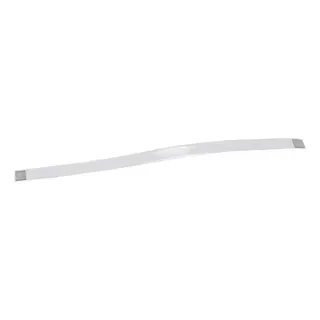
FFC (Flexible Flat Cable) and FPC (Flexible Printed Circuit) jumpers from Molex solve one persistent problem: how to route signals between two boards when the gap is too tight for discrete wires and the geometry rules out a rigid PCB connector. You are looking at pre-formed flat cables with conductor pitches as low as 0.3 mm, terminated with stiffened contacts that slide into low-profile ZIF or non-ZIF receptacles — no stripping, no crimping, no individual wire routing.
These are not general-purpose wire assemblies. You reach for an FFC jumper when your mechanical stack-up demands a sub-1 mm installed height, or when the interconnect crosses a hinge line (laptop lid, printer carriage, scanner head), or when the assembly process cannot tolerate the per-wire labor of a discrete harness. Compared to the Molex Premo-Flex line (which handles higher flex-cycle counts and dynamic applications), the standard FFC / FPC jumpers are cost-optimized for static or low-cycle installations — ideal when you need reliable connectivity but do not need a million flex cycles.
| Parameter | Typical Range | Notes |
|---|---|---|
| Conductor pitch | 0.30 mm – 2.54 mm | 0.5 mm and 1.0 mm are the highest-volume pitches |
| Conductor count | 2 – 80 positions | Jump in multiples of one; odd counts are stocked for custom needs |
| Cable length | 20 mm – 305 mm | Longer runs available; account for insertion depth at both ends |
| Contact orientation | Same-side, opposite-side, or custom fold | Same-side is standard for straight-across links; opposite-side flips the contact face |
| Contact plating | Tin, gold flash, 0.38 µm Au | Tin for cost-sensitive static installs; gold for low-voltage or humid environments |
| Insulation material | Polyester or polyimide | Polyimide preferred above 85 °C operating temp |
| Stiffener type | Polyester / polyimide / none | Required for ZIF-locking receptacle insertion; thickness calibrated to connector spec |
| Voltage rating | 30 V – 60 V (typ.) | Pitch-dependent; verify against your clearance requirements |
| Current rating | 0.2 A – 1.5 A per conductor | Depends on conductor cross-section and ambient temp derating |
| Operating temperature | –40 °C to +105 °C | Polyimide extends the upper bound; polyester tops out around 85 °C |
Start with your receptacle. The connector series you are mating to — Molex Easy-On, SlimStack, PanelMate, or a competitor's ZIF socket — dictates the pitch you need and whether you require stiffeners. Do not guess the stiffener spec; pull it from the receptacle datasheet.
Match conductor count to your bus width. If you are carrying a 40-pin LVDS interface plus ground returns, pay attention to signal-to-ground ratio and whether the adjacent-conductor coupling at your selected pitch is acceptable. At 0.3 mm pitch, crosstalk between adjacent conductors is non-trivial above roughly 50 MHz — run your own signal-integrity check rather than relying on the cable alone.
Pick contact orientation based on layout. Same-side contacts mean the cable folds flat between two boards mounted on the same plane. Opposite-side contacts let you cross from the top of one board to the bottom of another without twisting the cable — cleaner routing and less mechanical stress.
Plating is a reliability vs. cost tradeoff, not a checkbox. Tin is fine in dry indoor environments with at least 10 mating cycles minimum. Gold flash buys you low contact resistance in humid or condensing environments. Full 0.38 µm gold is worth it if the connection stays mated for years and you cannot afford contact oxidation — think automotive under-dash or outdoor kiosk enclosures.
Molex stocks the 0.5 mm and 1.0 mm pitch variants in the highest volume — lead times on these are typically 4–6 weeks for production quantities, with broad distributor stocking at Digi-Key, Mouser, and Arrow. Odd conductor counts, custom lengths beyond 305 mm, and opposite-side contact configurations are often build-to-order. If your BOM calls for a non-stock variant, budget 8–10 weeks and negotiate the MOQ upfront; some configurator-generated part numbers carry a 1,000-piece minimum.
For prototyping, Molex offers pre-cut sample kits in the 0.5 mm, 1.0 mm, and 1.25 mm pitches with assorted lengths and conductor counts — these are stocked at most catalog distributors and will save you a week vs. ordering individual part numbers one at a time.
The Molex FFC / FPC Jumper Cable series groups 384 related part numbers, each listed with full specifications, a datasheet where available, and an RFQ option. The listed variants share a common cable type of FFC, FPC, length - exposed ends of 0.157\" (4.00mm) and number of conductors of 6. Variants differ by length and termination style, so you can match the exact length your application requires using the selection guide below.
| Parameter | 150200051 | 150200053 | 150200055 | 150200056 | 150200057 | 150200058 |
|---|---|---|---|---|---|---|
| Length | 1.180\" (29.97mm) | 2.000\" (50.80mm) | 3.000\" (76.20mm) | 3.000\" (76.20mm) | 4.000\" (101.60mm) | 4.000\" (101.60mm) |
| Termination style | Top on Both Sides, Backers on Both Sides | Top on Both Sides, Backers on Both Sides | Top on Both Sides, Backers on Both Sides | Top on One Side, Bottom on Other, Backers on Both Sides | Top on Both Sides, Backers on Both Sides | Top on One Side, Bottom on Other, Backers on Both Sides |
Request a quote on any FFC / FPC Jumper Cable part number and we confirm price, availability and lead time per line — including end-of-life and allocation-constrained variants.
Molex
Molex
Molex
Molex
Molex
Molex
Molex
Molex
Molex
Molex
Molex
Molex
Molex
Molex
Molex
Molex
Molex
Molex
Molex
Molex
Molex
Molex
Molex
Molex
Molex
Molex
Molex
Molex
Molex
Molex
Molex
Molex