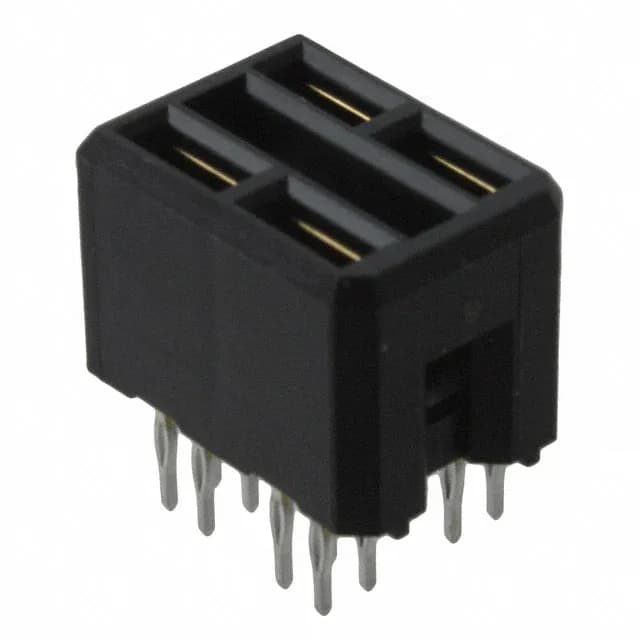
What it is — and where it sits in the Airmax VS series
The Amphenol 10028916-4554P00LF is a 4-circuit, 2-row blade power receptacle built on the Airmax VS® platform — the series Amphenol positions for mid-to-high current power distribution at the daughtercard interface. With an 80 A per-circuit rating at 150 V, it sits at the power-delivery end of board-level interconnect rather than the signal tier. The press-fit termination means the receptacle lands in the daughtercard PCB without wave or reflow soldering — the compliant-pin interface holds during assembly and carries the high current path directly into the board plane. The board guide feature keys the daughtercard into the backplane or midplane before the blade contacts mate, protecting both the connector and the power planes from mis-insertion damage in dense rack systems.
80 A at 150 V — what the ratings mean for the power rail
80 A per contact at 150 V is a genuine power-tier rating, not a signal spec with a high number attached. At this current the contact plating is doing real work: the 30.0 µin (0.76 µm) gold or Gold GXT™ finish maintains low-resistance stability across thermal cycles and vibration — the conditions that degrade blade contacts in rack-level power distribution. The UL94 V-0 housing sets the flame-class floor the board designer needs for the end equipment. The 2-row × 2-column layout delivers four independent power blades — typical for 2-phase or dual-rail architectures. With all four positions loaded and a typical contact layout of 4 Power, there is no position reduction or half-circuit option on this variant to trade off against.
Where blade power receptacles of this class are used
Blade power receptacles at this current and form factor are the daughtercard power inlet in server racks, storage enclosures, and telecom shelf assemblies — anywhere a midplane or backplane distributes power to multiple plug-in modules without a discrete cable harness. The press-fit through-hole footprint anchors the connector directly to the board plane for impedance control and thermal conduction to the backplane.