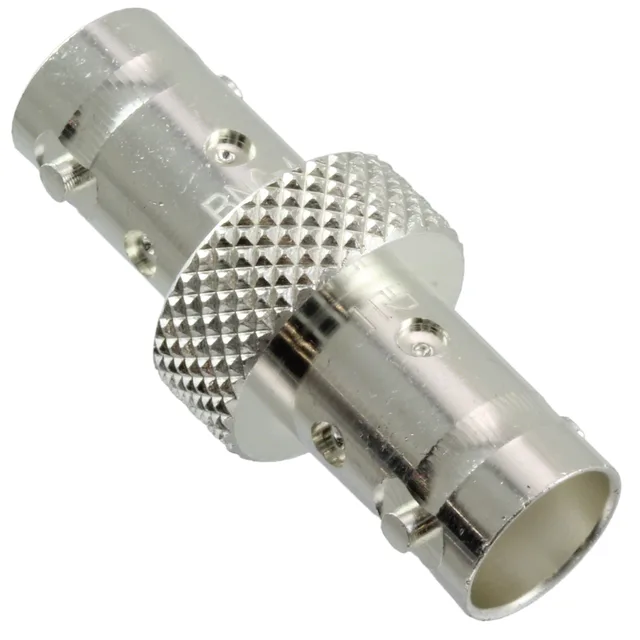
The Hirose BNC-A-JJ-1(40) is a straight BNC jack-to-jack adapter — a barrel coupler that joins two BNC male cable ends or panel jacks end-to-end. It is a same-series conversion, meaning both ends are BNC female, and it is intended for inline, free-hanging use with no panel or PCB mounting. The adapter is rated for 50 Ohm characteristic impedance and a maximum frequency of 4 GHz, covering the bulk of common RF test, telecom, and video signal paths.
The 4 GHz bandwidth ceiling means this barrel will pass signals cleanly up through the low microwave region — think L-band, S-band, and the upper end of cellular backhaul. Below that frequency, the 50 Ohm impedance match keeps return loss acceptable for most test equipment and antenna feeds. The limiting factor at the top end is the BNC interface's own geometry, not the contact material; for a barrel adapter that sees no cable flex, 4 GHz is a solid spec for a bayonet-lock connector.
Silver-Plated Beryllium Copper Contacts — Cycle Life and Contact Resistance
The centre contacts are beryllium copper with silver plating, and the brass body carries a silver finish. Beryllium copper is the standard spring material for RF contacts — it holds its shape through repeated mates without taking a set. The 1000 mating cycle rating is high for a BNC barrel; most economy-grade barrels are good for 500 cycles or fewer. Silver plating gives very low contact resistance at first mate, but it tarnishes in sulfur-rich air over time. For a test-bench barrel that gets cycled regularly, the tarnish film wipes off with each mate. For a fixed installation in a corrosive environment, gold-plated contacts would be preferable — but the silver body finish here is consistent with the Hirose BNC series standard.