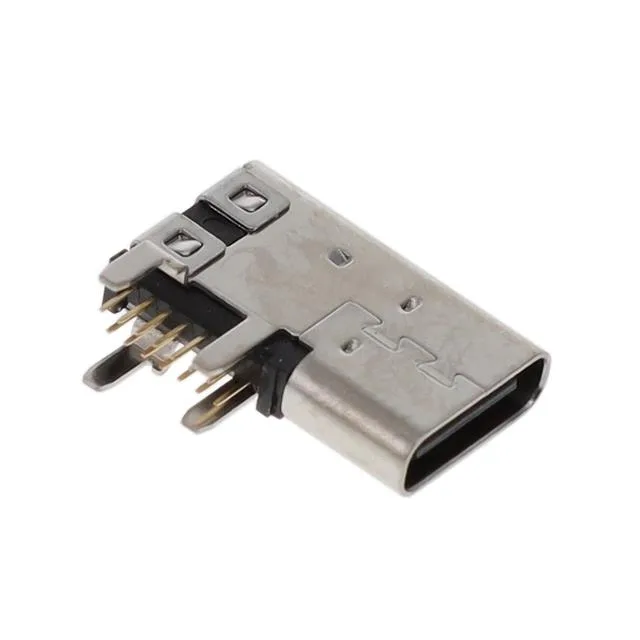
What This USB-C Receptacle Does in the Assembly
The Molex 2169890002 is a USB Type-C receptacle, the board-mounted half of a USB-C interconnect. It carries the full 24-contact complement defined by the USB-C standard — 14 signal contacts plus 10 dummy pins that handle the configuration channel, power delivery negotiation, and ground returns. This is a standard compliance box to tick for commercial and industrial electronics.
Pinout and USB Standard Compatibility
The 24-contact layout (14+10 dummy) is the full USB Type-C pinout defined by the USB Implementers Forum. It supports USB 3.1 Gen 2 (10 Gbps), USB Power Delivery up to 100 W, and alternate modes such as DisplayPort or Thunderbolt — provided the system controller and cable assembly match. The receptacle itself does not enforce a specific USB generation; it is the physical interface that any USB-C plug mates with. The pinout is standard: the two sets of 12 contacts on each side of the receptacle mirror the symmetrical design of the USB-C plug, allowing flip-insertion.
This receptacle mounts through-hole with a right-angle orientation, described as vertical flag mounting. The solder tails go through the PCB and are wave-soldered or hand-soldered; the board lock provides additional hold during the soldering process and after. The unshielded variant means there is no metal shell over the top — the steel and stainless shielding material listed refers to the internal shield structure of the USB-C interface itself, not an external EMI can. For applications requiring an overall shield, a separate metal housing or chassis ground connection is needed.