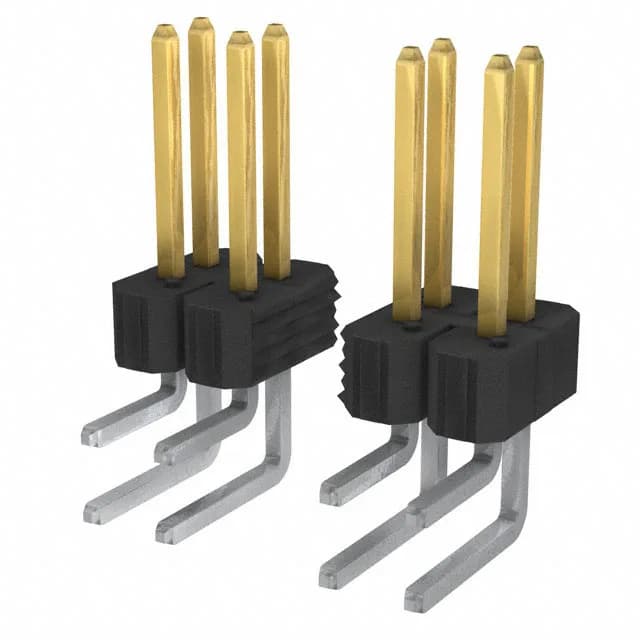
What this connector is
The Amphenol BERGSTIK II 68022-372 is a 72-position dual-row 0.100-inch (2.54 mm) pitch board-to-board header in the BERGSTIK II series, right-angle through-hole mounted with all positions loaded. Gold or Gold GXT contact plating at 50 µin (1.27 µm) thickness drives the mating-cycle durability; phosphor bronze spring material gives the square pin the compliance to make reliable contact across the full row under thermal cycling. The housing is black polyester rated UL94 V-0, the insulation body stands 0.240 inch (6.10 mm) above the board surface, and the post extends 0.110 inch (2.79 mm) below the solder tail — the mating pin engagement length is 0.318 inch (8.08 mm). Rated 5 A per circuit at 110 V AC/DC.
Where it fits in a system
Board-to-board headers at 2.54 mm pitch are the workhorse of perpendicular board stacking — backplanes, daughter cards, and option modules that need a dense but field-serviceable midplane junction. The right-angle orientation means the header mounts on the parent board edge and accepts the mating daughter card vertically. Unshrouded contacts give you routing access on both sides of the pin column but require alignment guidance in the daughter card slot — no keying boss to enforce polarity. The push-pull fastening type describes the insertion feel; in high-vibration environments the board assembly typically adds a guide pin or card-edge guide to take the mechanical load off the header pins.
What the key ratings mean for the BOM decision
The 72-circuit count is the primary fit check — confirm the daughter card edge has a 72-position footprint at the same 0.100-inch row and within-row pitch. The 5 A per contact rating is signal/power boundary territory; at 110 V and 5 A the connector is rated for low-level power distribution on the same backplane bus as signal lines, but the 50 µin gold plating (not tin) is what gives the contact the durability to carry that current through repeated mating cycles without the resistance climb tin would show. UL94 V-0 flammability rating qualifies it for enclosed equipment panels where flame propagation is controlled.