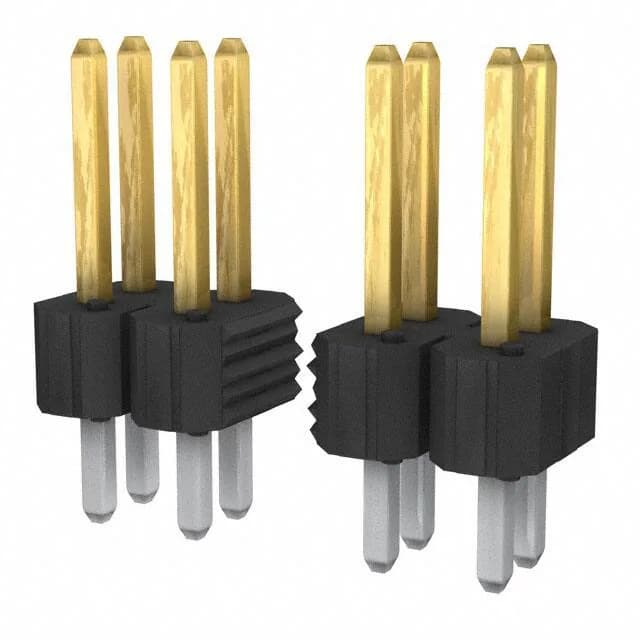
What This Connector Is
The Amphenol ICC BERGSTIK II 86503-140HLF is a 40-position dual-row unshrouded male header at the industry-standard 0.100" (2.54mm) pitch, rated 5 A per contact with gold-plated mating surfaces and through-hole solder termination. It is an unshrouded board-to-board header — no polarizing rib, so alignment in the receptacle is driven entirely by the square pin geometry and the mating half's slot. The housing is black glass-filled nylon rated UL94 V-0; contacts are phosphor bronze with either pure gold or Gold GXT plating at 30.0 µin (0.76 µm) on the mating interface. The push-pull fastening type means the mating half locks with a simple push-and-pull action — no screw, latch, or threaded ring to engage in the field.
Ratings That Drive the Decision
5 A per contact at 110 V — the headline rating, adequate for board-to-board signal or low-power interconnect. The real selector is the plating grade: 30.0 µin (0.76 µm) of gold or Gold GXT on the mating interface supports repeated mate/de-mate without tin-whisker or surface-oxidation risk. The housing is UL94 V-0 rated. Voltage rating is 110 V — confirm this exceeds the working voltage of the signal or power rail before selecting the BOM line.
Mating Half and Field Replacement
As an unshrouded square-pin male header, this mates with any standard dual-row BERGSTIK II female receptacle or IDC socket with the matching 40-position 2-row 0.100" configuration. The push-pull fastening type on this header means the receptacle should have a compatible friction-lock or snap-in feature to hold the pair mated — without a positive latch the connection relies on pin retention alone. For field service: square pins are robust against repeated mating if the receptacle is properly seated; fretting at the contact interface is the main failure mode if the plating is compromised or the contact normal force is insufficient. Order the matching female housing as a companion line when specifying the BOM — mismatched receptacle polarity or pin-count will not be obvious until first assembly.