Key ratings and what they mean for the design
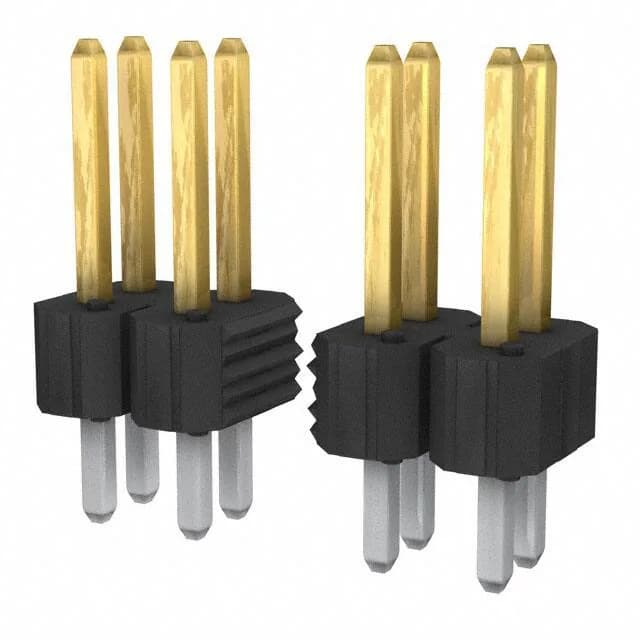
The 86503-154HLF: 54 positions is a dense dual-row count — the largest circuit-count option in the BERGSTIK II family that still uses the 0.100 inch grid without going to a larger pitch or a card-edge format. At 5A per contact the header handles power distribution across multiple rails or signal bundles without needing a separate power connector, provided the 110V rating stays within the application's creepage and clearance budget. The gold or Gold GXT plating at 30.0 µin is a mid-grade precious-metal finish — better wear resistance and lower contact resistance across multiple mating cycles than tin, but not the full hard-gold stack of high-cycle telecom connectors. For instrumentation, control cards, and industrial modules where the daughtercard plugs in once at assembly and stays mated, the plating is more than adequate. If the application demands hundreds of mate/de-mate cycles, confirm the cycle life against the specific BERGSTIK II family derating curve. The 0.100 inch (2.54 mm) insulation height means the mated header stands off the board surface by 2.54 mm — enough for cleaning flux residue underneath in through-hole assembly and providing a modest mechanical standoff, but not a true mezzanine stack height for high-speed differential routing where controlled impedance matters.
What the series is built for
BERGSTIK II headers are board-to-board interconnects used in industrial control modules, test and measurement equipment, instrumentation front panels, and communications infrastructure cards where a daughtercard or daughterboard plugs into a backplane or motherboard. The unshrouded header accepts the matching BERGSTIK II receptacle housing or a standard 0.100 inch pitch IDC ribbon connector — the push-pull fastening type describes the mating action, not a locking clip, so in high-vibration environments a separate board latch or screw-down strain relief is needed on the mating half. The UL94 V-0 black housing meets the flammability rating required for industrial and commercial equipment enclosures. Phosphor bronze contacts provide good spring fatigue resistance compared to brass, extending contact reliability across thermal cycling. All 54 positions are populated — no partial-load option on this part number.