What it is and where it fits
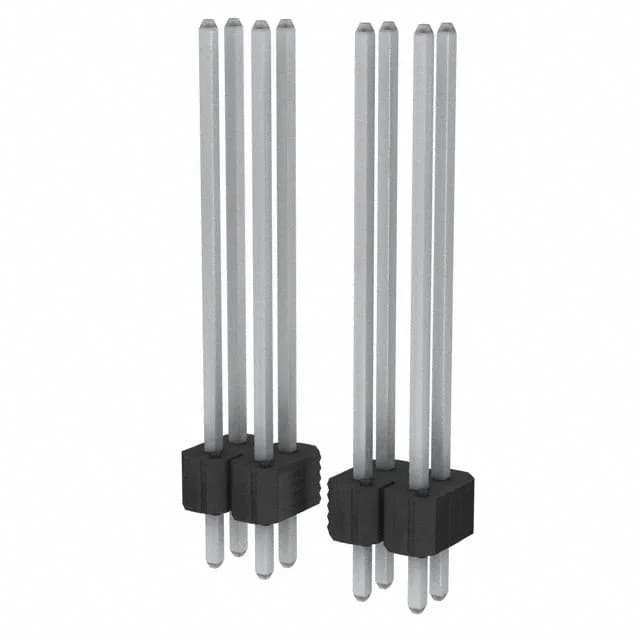
The Amphenol FCI 87052-466HLF is the 66-circuit member of the BERGSTIK II dual-row header series — a 0.100" (2.54mm) pitch unshrouded male pin header rated 5 A per contact at 110V, built for board-to-board stacking in older industrial and telecom backplane applications. The 0.100" (2.54mm) dual-row pitch places this in the classic IDC/ribbon-cable compatible footprint family — 66 positions across two rows, with square male pins that seat into matching friction-fit or soldered receptacles without a locking clip. Tin on both the mating face and the solder tail, 100µin (2.54µm) thick on the mating side — heavy enough to handle repeated field mate/de-mate cycles without the galling you'd get with thin flash tin.
Board layout and footprint
Row spacing matches pitch at 0.100", so the grid is uniform — the routing channel between rows is the same 2.54mm as the pin pitch, which is tight but workable for signal traces when you need to fan out from the inner rows. The insulation height of 0.100" (2.54mm) is the board standoff dimension. Unshrouded — no polarization key on the housing itself. If mis-mate prevention matters in your stack, you need to source the matching keyed receptacle housing from the BERGSTIK II family, or add a board-level polarizing pin.
What the ratings mean for the job
5 A per contact at 110V is solid for a 2.54mm pitch header — suitable for low-level power distribution on a backplane (lighting arrays, relay driver rails) without pushing the current density above the tin-tin contact ceiling. The phosphor bronze base material carries that current without excessive temperature rise across the contact length. Push-pull fastening type — friction retention only. No positive lock. If vibration is a factor in the application, a board-mount clip or adhesive stakes on the header flange are cheap insurance against the housing walking off the pins over time.
Sourcing and the BOM line
Packaged in a bag — not tape-and-reel or tube. For high-volume automated placement, verify whether your assembly partner can handle loose-pack insertion or if a repackaging step is needed before the production run.