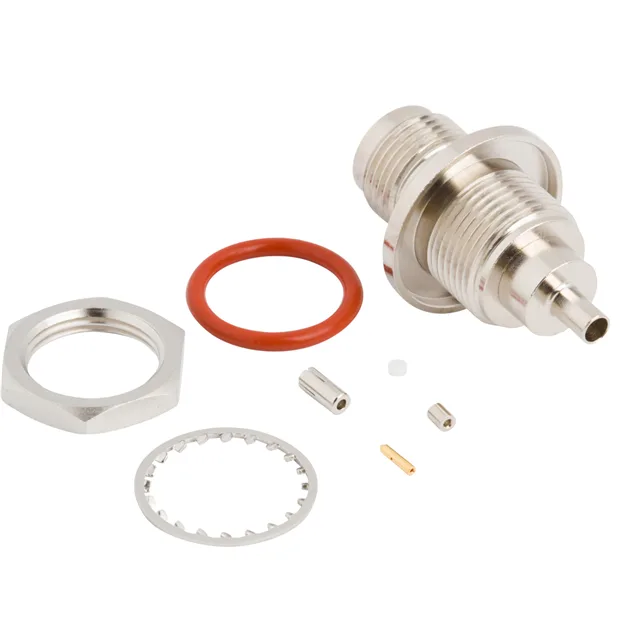
TNC Bulkhead Jack, 50 Ohm, DC-6 GHz
The threaded coupling gives it a vibration-resistant mate that a BNC bayonet cannot match, which is why it shows up on antenna feeds and radio equipment that gets bolted into place. That cycle count is typical for a field-serviceable RF connector — enough for install-and-forget or periodic swap-out, but not a daily test-port duty. The seal lives at the bulkhead face, not the thread, so the panel gasket does the work. This one is built for 1.13 mm coaxial cable; the shield terminates with a crimp, and the center conductor solders into the pin.
What the 50 Ohm and 6 GHz Ratings Mean
This is the 50 Ohm version. The 6 GHz upper limit is the practical ceiling for a standard TNC with a PTFE dielectric. The 500-cycle rating on the gold-plated center contact means the plating thickness is enough for repeated reconnection without exposing the base metal. Gold on the mating surface prevents oxide buildup that would raise contact resistance at RF frequencies. For a permanent install that gets mated once, the cycle life is irrelevant; for a field-swapped antenna line, it is the difference between a clean signal path and intermittent noise after a few dozen swaps.