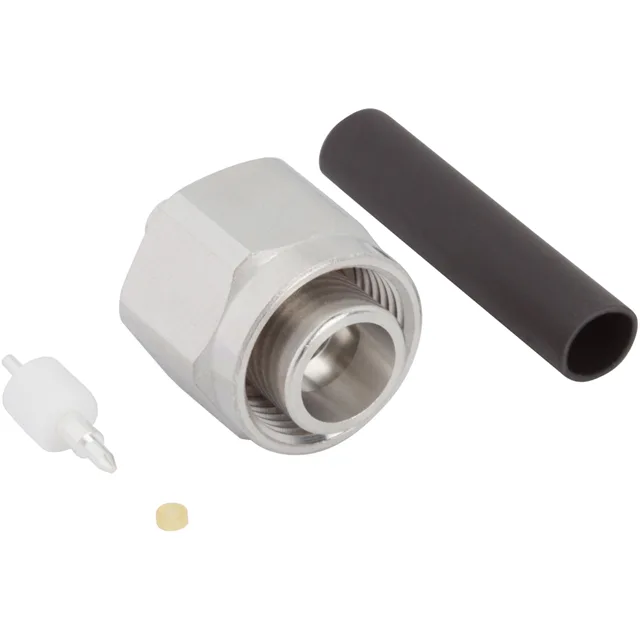
2.2/5 Plug for RG-402 Semi-Rigid, 50 Ohm, 6 GHz
The 225-101P-52S: The dielectric is PTFE, and the shield and contact are both solder-terminated.
What the 6 GHz and 50 Ohm Ratings Mean for Your RF Path
The 6 GHz maximum frequency covers L, S, and C bands, which is enough for many wireless backhaul, instrumentation, and antenna feeds. Above 6 GHz, the connector's geometry starts to limit performance, so don't push it past that ceiling.
This plug is specifically listed for Cable Group RG-402 (.141" Semi Rigid). That means the center conductor diameter and dielectric OD match the connector's inner dimensions — you solder the center pin to the signal wire and solder the shield to the connector body. No crimp tool needed, just a clean solder joint. The threaded coupling (fastening type) gives a vibration-resistant mate, and the free-hanging mount lets you use it as a cable-end connector.
For a production line or a frequent-swap panel, you'd want a connector with a higher cycle rating. The silver-plated center contact is standard for RF; it handles the signal well but can tarnish if left unmated in a corrosive environment, so keep the dust cap on when it's not in use.
The 225-100J-52S is the jack (female socket) counterpart to this plug — same 2.2/5 series, same 50 Ohm impedance, same 6 GHz limit, same RG-402 cable group. The key difference is the connector type: the 225-101P-52S is a plug, male pin (free-hanging), while the 225-100J-52S is a jack, female socket (flange-mount). If you're building a cable assembly, you pair the plug with the jack. The 225-100J-52S also uses a beryllium copper center contact instead of brass, which gives it slightly better spring properties in the socket.