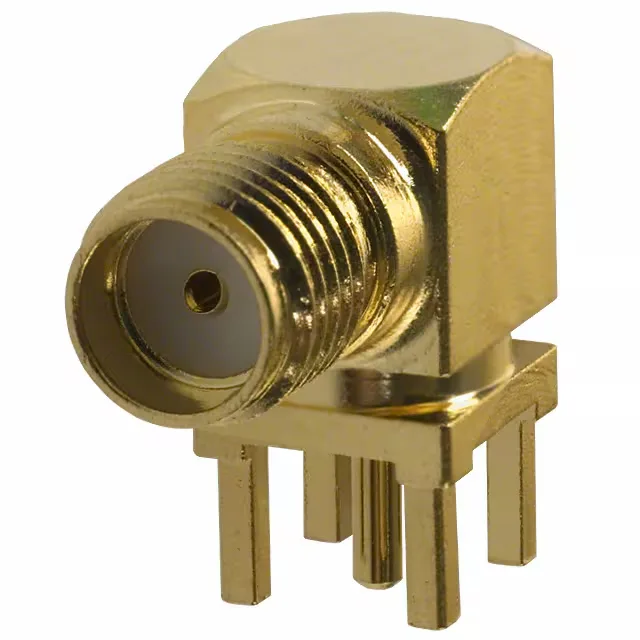
The 901-143-6RFX: The connector carries a 50 Ohm impedance rating and is specified to 18 GHz maximum frequency, which covers the bulk of standard SMA applications — Wi-Fi, cellular, GPS, and general-purpose microwave links up to Ku-band.
The 18 GHz Ceiling — What It Means on the Bench
18 GHz is the standard SMA frequency ceiling. The PTFE dielectric keeps the signal path stable across the band, and the 50 Ohm impedance holds the line against the board trace when the launch geometry is right.
Right-Angle PCB Mount — Board Layout Consideration
The 500-cycle mating rating is standard for SMA; the gold-over-beryllium copper center contact holds its spring force across those cycles without the fretting you'd see with a plain brass contact.
The difference is the body material: the 901-143-6RFX uses brass, while the 901-144 uses stainless steel. For most bench and indoor applications, brass is fine — it's cheaper and machines well. Stainless steel gives better corrosion resistance and mechanical strength for outdoor or high-vibration environments, but it costs more and is harder to solder to. If the BOM calls for brass and the application is benign, stick with the 901-143-6RFX. If the environment is aggressive or the connector sees repeated torque, the 901-144 is the safer call.