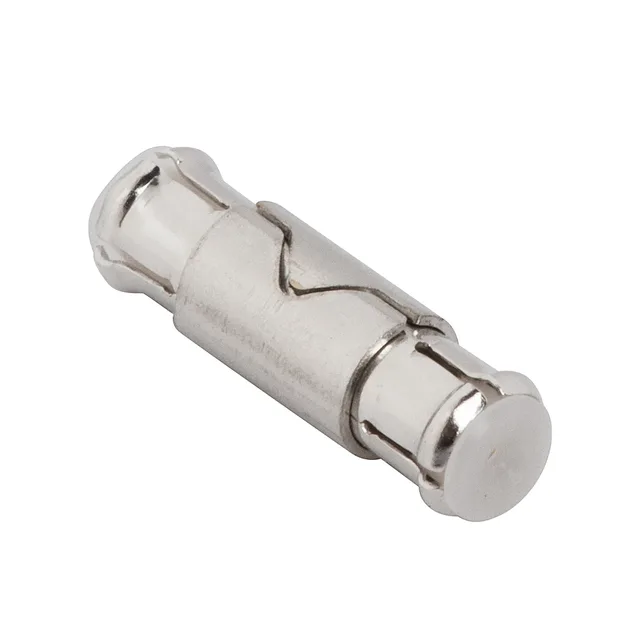
The Amphenol RF 920-517A-52S is a straight, in-line plug-to-plug adapter within the HD-EFI series, designed to join two HD-EFI plug interfaces with female socket center contacts. It is a same-series conversion type, meaning it connects two identical interface styles — no gender change, no series transition. The adapter is built for 50 Ohm RF systems and is specified from DC through 6 GHz, covering common wireless, telecommunication, and instrumentation frequency bands. The body is machined from beryllium copper with a white bronze finish, and the center contacts are gold-plated copper alloy, separated by a PTFE dielectric. Snap-on fastening on both ends provides quick, tool-less mating and unmating — typical for blind-mate or dense-panel applications where wrench access is limited.
The 6 GHz maximum frequency covers 5 GHz Wi-Fi, LTE bands, and many radar and satcom links up to C-band. The 0.15 dB insertion loss is very low for a mated pair of connectors in a single adapter body; in a cascade of several adapters, the loss adds, but this one will not dominate the budget. The 200 mating cycles are typical for a snap-on interface with gold-plated center contacts — the gold resists fretting corrosion during repeated connects, while the beryllium copper body maintains spring force over the rated cycle count. For field-service or test-rack use where connectors are swapped daily, 200 cycles translates to years of duty; for a production-line fixture that cycles hundreds of times per shift, a higher-cycle alternative would be needed.
Both are straight plug-to-plug adapters with 50 Ohm impedance, snap-on coupling, and gold-plated center contacts. The key difference is the dielectric material: the 920-517A-52S uses PTFE, while the 920-509A-51S uses polyoxymethylene (POM). PTFE offers lower dielectric loss at higher frequencies, which supports the 6 GHz rating; POM is a lower-cost thermoplastic with adequate performance through the same frequency range but slightly higher loss. For most applications up to 6 GHz, either will work — the choice comes down to the system's loss budget and the purchasing preference for the specific order code on the BOM.