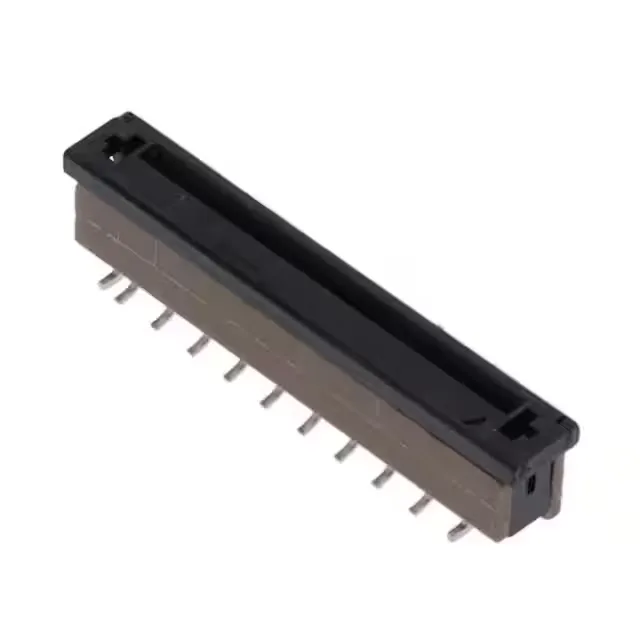
18-Position FFC/FPC Vertical SMT with ZIF
The SFW18S-2STME1LF: It mounts vertically on the PCB via surface-mount solder tails and uses a zero-insertion-force (ZIF) actuator — the front-flip lock opens the contact beams so the FPC slides in without scraping the pads, then clamps them down for a gas-tight joint. The housing is brown UL94 V-0 thermoplastic; the actuator is the same glass-filled material.
Pitch and Footprint for Board Layout
The connector accepts FPC thickness of 0.33 mm — a common value for standard signal flex circuits. The contact type is vertical, one-sided, meaning the FPC's exposed pads face one direction (usually up) and the contact beam wipes them on clamping.
ZIF Actuation and Mating Cycle Reality
Zero insertion force means the actuator is opened, the FPC is inserted, then the actuator is closed to clamp the contacts. This avoids scoring the FPC pads during insertion — critical if the cable is ever re-terminated in the field. The 20-cycle rating with tin contacts is typical for a cost-optimized signal connector; in a product that sees quarterly reconnects, that's five years of service life at the interface.
Peer Comparison: SFW18S-2STE1LF
The closest sibling is SFW18S-2STE1LF — same 18 positions, same 1.00 mm pitch, same 5.30 mm height, same tin contacts. The difference is termination: SFW18S-2STME1LF uses straight solder tails (SMT), while SFW18S-2STE1LF uses kinked pins. The kinked pins provide a mechanical lock in the solder joint that resists shear from cable strain. If your board layout has room for the kinked footprint and you expect the FPC to be tugged during assembly or service, the -2STE1LF is the more robust choice. If you need a standard SMT pad layout, the -2STME1LF is the one.