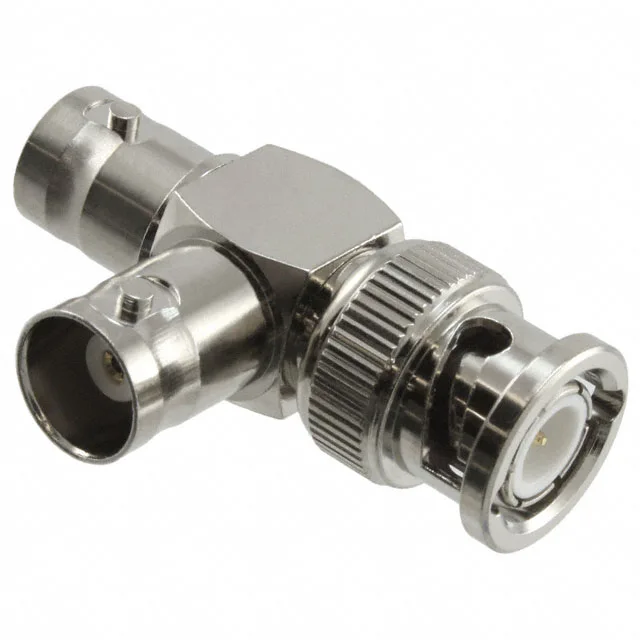
What This BNC T Adapter Does in the Signal Path
The Amphenol RF 112567 is a T-shaped BNC adapter that converts a single BNC plug input into two BNC jack outputs — a same-series (BNC to BNC) adapter with a male pin on the input side and two female sockets on the output legs. The brass body with nickel finish gives it the corrosion resistance and RF shielding you expect from a lab-grade adapter, while the bayonet-lock fastening on all three ports keeps the connection secure under cable strain.
Gender and Port Configuration
The 112567 is a plug-to-jack adapter: the common leg is a BNC plug with a male centre pin (Convert From: BNC Plug, Male Pin), and the two split legs are BNC jacks with female centre sockets (Convert To: BNC Jack, Female Socket).
50 Ohm, 4 GHz — What the Bandwidth Rating Means
The 4 GHz maximum frequency is the upper end of the adapter's usable bandwidth. Below that, the 50 Ohm impedance match holds across the T junction without introducing a standing-wave ratio that would degrade signal integrity. For typical BNC applications — oscilloscope probes, signal generators, video surveillance, baseband RF — the 4 GHz ceiling is more than adequate; the BNC interface itself is often the bandwidth bottleneck in older equipment. The 50 Ohm impedance is standard for RF test and telecom; if you're working in 75 Ohm video distribution, the 112462 peer (zinc body, 75 Ohm) is the variant to check.
Brass vs Zinc: Body Material Choice Among Peers
The 112567 uses a brass body with nickel finish. Zinc is lighter and cheaper to cast in volume; brass machines better and has slightly higher RF conductivity. Both are active and interchangeable in the signal path, so the choice comes down to mechanical preference or BOM cost. The 112459 is the brass body with gold finish (higher corrosion resistance for outdoor or high-humidity racks), and the 112462 is the 75 Ohm zinc variant for video systems.