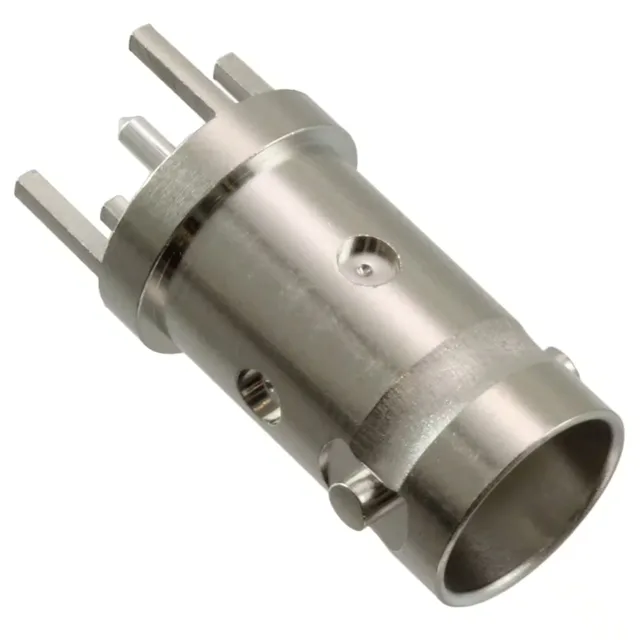
Hirose Electric Co Ltd BNC-R-PC(40) — RF / Coaxial Connectors

Hirose BNC-R-PC(40) BNC Jack, 50 Ohm, 2 GHz, Through Hole

MPNBNC-R-PC(40)
Active

Hirose BNC-R-PC(40) BNC jack, female socket, 50 Ohm, 2 GHz, through-hole, solder termination, nickel body, silver center contact, 5000 mating cycles, Bulk.

$15.0700Ref. price · indicative, final on quote
Sourced new & surplus through independent channelsAuthenticity-screened · ESD-safe packingListing updated Aug 2026

Specifications

BNC-R-PC(40) specifications
ParameterValue
MountingThrough Hole
Connector typeJack, Female Socket
Fastening typeBayonet Lock
Frequency - max2 GHz
Operating temperature-55°C~85°C
Body materialBrass
Housing colorSilver
Dielectric materialPolytetrafluoroethylene (PTFE)
Center contact materialBeryllium Copper
PackageBulk
Impedance50Ohm
Body finishNickel
Mating cycles5000
Number of ports1
Shield terminationSolder
Contact terminationSolder
Center contact platingSilver

Product details

50 Ohm BNC Jack, 2 GHz Ceiling — Hirose BNC-R-PC(40)

It's a standard bayonet-lock BNC interface, but the spec sheet stops at 2 GHz — that's the usable frequency ceiling before the BNC geometry starts to mode, so treat it as a sub-2 GHz part for clean signal transfer. The silver-plated beryllium copper centre contact and PTFE dielectric keep the impedance steady across that band. Rated for 5000 mating cycles, which is well above the typical 500-cycle BNC. That cycle life points to a connector meant for test equipment, instrumentation panels, or field-swappable modules where the cable gets disconnected regularly. The nickel-plated brass body and silver centre contact hold up to repeated connect-disconnect without the plating wearing through to base metal. The shield termination is solder — you're soldering the braid to the shell, not relying on a crimp ferrule, which gives a lower DC resistance ground path at the cost of a slower assembly step.

BNC-R-PC(40) vs BNC-R-PC(50)

The BNC-R-PC(50) shares the same 50 Ohm impedance and BNC jack form factor, but the suffix difference — (40) vs (50) — typically indicates a plating or material variant in Hirose's BNC-R series. The (40) carries silver centre contact plating; the (50) may use a different centre contact finish. For RF signal paths, the plating grade affects contact resistance and intermodulation performance at higher frequencies, so confirm the BOM's required plating before substituting.

Frequently asked questions

Where can I purchase BNC-R-PC(40)?

BNC-R-PC(40) is sourced to order against an RFQ through independent distribution. Submit a request for current pricing and availability — stock and lead time are confirmed at quote time.

What is the impedance of BNC-R-PC(40)?

50 Ohm nominal impedance, standard for RF test and telecom systems. The PTFE dielectric and beryllium copper centre contact maintain that impedance through the 2 GHz band.

What is the difference between BNC-R-PC(40) and BNC-R-PC(50)?

Both are 50 Ohm BNC jacks, but the (40) variant specifies silver centre contact plating. The (50) variant may use a different centre contact finish. For most sub-2 GHz applications either works, but confirm the plating requirement against the BOM.