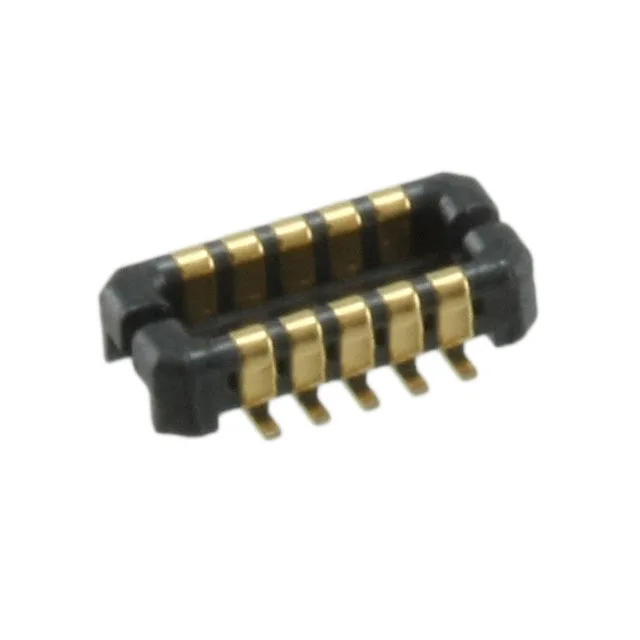
Hirose Electric Co Ltd DF37B-10DP-0.4V(53) — Mezzanine & Stacking Connectors

Hirose DF37B-10DP-0.4V(53) Header, 10 Pos, 0.40mm Pitch

MPNDF37B-10DP-0.4V(53)
Active

Hirose DF37 series header, DF37B-10DP-0.4V(53), 10 positions, 2 rows, 0.016" (0.40mm) pitch, surface mount, gold contacts, 0.030" (0.75mm) height above board, solder retention.

$0.9700Ref. price · indicative, final on quote
RoHSROHS3 Compliant
SeriesDF37
Source DocumentedChannel stated on listing & quote
Condition PhotosReal unit photos / video on request
WhatsApp AnswersFast human replies for stock & sourcing questions
Worldwide DispatchDHL/FedEx — transit quoted per order
Independent supplier — new & surplus connector stock· Listing updated Aug 2026

Specifications

DF37B-10DP-0.4V(53) specifications
ParameterValue
SeriesDF37
MountingSurface Mount
Connector typeHeader, Outer Shroud Contacts
Height above board0.030\" (0.75mm)
Mated stacking heights0.98mm
Pitch0.016\" (0.40mm)
PackageTape & Reel (TR) Cut Tape (CT)
FeaturesSolder Retention
Contact finishGold
Rows2
Positions10
Contact finish thickness2.00µin (0.051µm)

Product details

0.40mm Pitch Header for Tight Board-Stacking

The Hirose DF37B-10DP-0.4V(53) is a 10-position, dual-row header from the DF37 series, designed for parallel board-to-board stacking where board real estate is at a premium. The 0.016" (0.40mm) pitch forces a tight pad layout — expect 0.20mm to 0.25mm pad width on the footprint, with trace escape routing between pads requiring a controlled impedance stack if signals run above a few hundred MHz.

It is ROHS3 Compliant, which covers the EU RoHS directive's current substance restrictions.

Frequently asked questions

What is the pitch of DF37B-10DP-0.4V(53)?

The pitch is 0.016" (0.40mm), which is the center-to-center spacing between adjacent contacts. This tight pitch drives the PCB footprint — expect fine-pitch SMT pads and narrow trace escapes between them.

What is the stacking height of Hirose DF37B-10DP-0.4V(53)?

The mated stacking height is 0.98mm. That's the total z-height from the bottom board's top surface to the top board's bottom surface when the header is mated with its matching receptacle. Check this against your component keep-out zones on the underside of the top board.