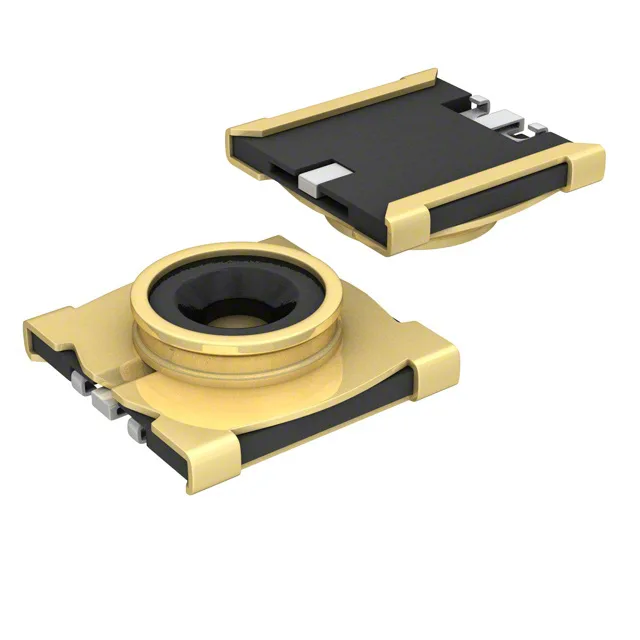
What the MS-180 Is — a Coaxial Switch Receptacle for RF Signal Routing
The Hirose MS-180 is a single-port coaxial switch receptacle, female socket, with a 2.24 mm plug diameter. It is designed for RF signal routing where a mechanically switched path is needed — the internal switch opens or closes the signal line when the mating plug is inserted or removed. The 50 Ohm impedance and 11 GHz maximum frequency place it in the mid-band RF range, suitable for wireless modules, antenna switching, and test-access ports on compact PCB assemblies. The connector is surface-mount terminated, with the shield and centre contact both soldered to the board. The snap-on fastening provides a positive retention without threads — quick to mate, but the 100-cycle rating tells you this is not a high-cycle field-service connector. It is built for a set-and-forget installation where the switch is actuated a few times during manufacturing or occasional maintenance.
The 11 GHz bandwidth and 0.3 dB insertion loss are the headline RF specs. Compared to the MS-162B sibling (10 GHz, 0.7 dB loss), the MS-180 delivers higher frequency and lower loss — a meaningful delta if your signal chain runs above 10 GHz or you need to minimise path attenuation. The insertion loss figure is measured at the connector itself; in a real board launch, the total loss includes the PCB trace and the mating interface, but the connector contribution is clean. The 50 Ohm impedance is standard for RF systems — the connector matches 50 Ohm transmission lines without a stub or impedance step.
Mating Cycles and Contact Plating — What the 100-Cycle Rating Means for Your Application
The 100 mating cycles is low compared to a typical RF connector like the MS-162B (12000 cycles). The difference is the switch mechanism: the MS-180 uses a snap-on retention and an internal switch contact that wipes on each mate. This connector is best specified for applications where the switch is actuated only during initial assembly or infrequent service — not for daily reconnection. The brass body gives good RF shielding and solderability. For the SMT process, the gold finish wets well with standard lead-free solder pastes.