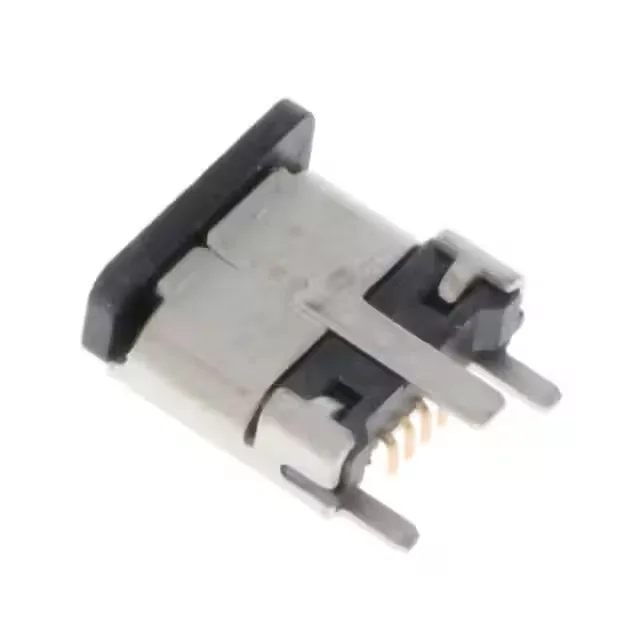
It carries 5 contacts — the standard pinout for micro-B — and is shielded with a steel/stainless shell to contain EMI from the USB 2.0 data pair. The gold-plated contacts and 10,000 mating cycle rating push this well beyond a basic consumer-grade USB port; it is built for equipment that sees repeated connect/disconnect cycles in the field, such as handheld instruments, medical peripherals, or industrial programming ports.
The headline number here is 10,000 mating cycles. A standard USB micro-B connector is typically rated for 5,000 to 10,000 cycles; this part sits at the top of that range, which means the gold plating is thick enough to survive frequent reconnection without the contact fretting that causes intermittent data errors. The current rating is split: 1A and 1.8A. In a USB 2.0 micro-B, the VBUS pin carries power while the other four are signal or ground. The 1.8A path is almost certainly the VBUS contact, sized for charging or power delivery above the 0.5A USB 2.0 baseline. The 30VAC voltage rating is typical for USB — the limiting factor is creepage across the 0.65 mm pitch, not the contact itself.
SMT Assembly and Pick-and-Place Readiness
The vertical mounting orientation means the USB port stands upright off the board — typical for edge-mounted or panel-mounted applications. The shielded shell is soldered to ground pads on the PCB, which also provides mechanical retention beyond the SMT signal pins.