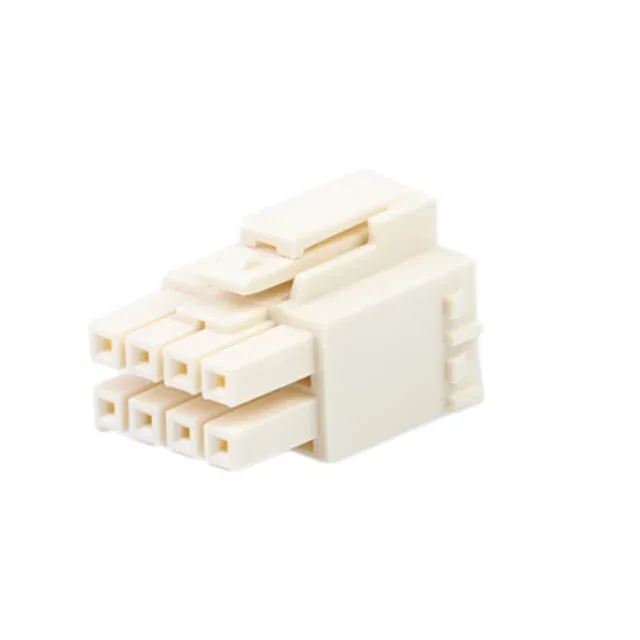
The natural polyamide (PA) housing carries a Terminal Position Lock (TPA) feature and is glow wire compliant. The latch lock snaps home with an audible click — you feel the mate rather than guessing it.
Why the TPA and Glow Wire Rating Matter
The Terminal Position Lock (TPA) is a secondary retainer that locks each crimped terminal into its cavity after insertion. In a high-vibration environment — think an industrial cabinet next to a motor drive — the TPA stops the terminal from backing out of the housing over time. Without it, a single loose terminal means an intermittent connection that takes hours to trace. Glow wire compliance (per IEC 60695-2-11) means the housing material resists ignition when a hot element contacts it. This is a requirement for household appliances and certain industrial equipment that must pass a glow-wire test at the system level. The PA housing carries this rating, so it slots into designs that need the flame-retardant paperwork.
Operating Range and Environment
The wide temperature range is driven by the PA insulation material, which holds its mechanical properties across the band — no cold-cracking at -40°C and no creep at 105°C continuous.
The TPA is pressed in after all terminals are seated to lock them. No soldering, no IDC — just a crimp tool and a hand insertion tool. The Ultra-Fit 172258 series uses a specific female crimp terminal — match the wire gauge and the plating grade to the application duty cycle.