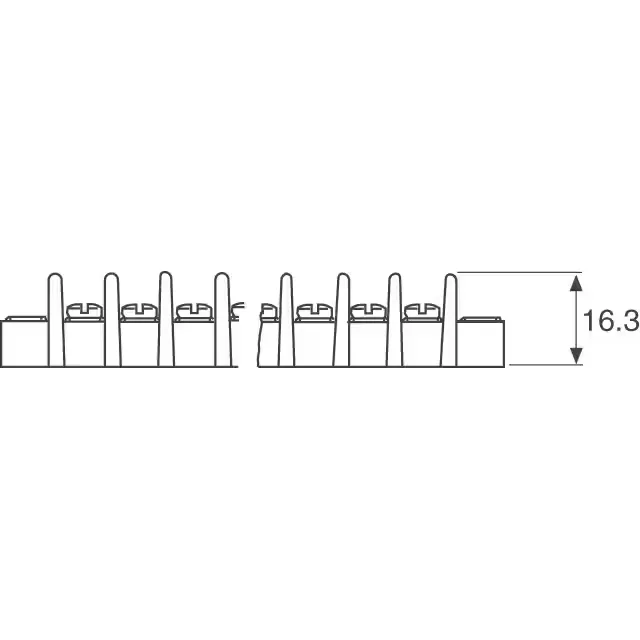
The Molex Beau 38720 387200204 is a 4-circuit barrier strip terminal block in the Beau 38720 series, designed for panel-mounted power distribution where a screw-terminated, closed-bottom block is called for. It carries a 0.375" (9.53 mm) pitch between terminals, rated 15 A at 300 V, and accepts 14-22 AWG wire. The flanged chassis-mount housing is black thermoplastic rated UL94 V-0, with dual-wall barriers between circuits for creepage protection. This is the 4-circuit member of the Beau 38720 series — a common choice for control cabinets, HVAC panels, and industrial power distribution where a reliable, field-serviceable screw-clamp connection is preferred over a pluggable connector. The closed bottom means the block is intended for through-panel wiring; the screw terminals are accessed from the top, and the wire exits through the back of the block into the enclosure.
The 0.375" (9.53 mm) pitch sets the terminal spacing — wide enough for comfortable termination of 14 AWG stranded wire with a standard screwdriver, but tight enough to keep the block compact for a 4-circuit run. The flanged chassis mount with closed bottom means the block is screwed to a panel, and the wires enter from the rear of the enclosure — typical for a junction box or control panel feed-through. The zinc clear chromate steel screws provide corrosion resistance in industrial environments; the 14-22 AWG wire range covers most control-circuit and small-power wiring.