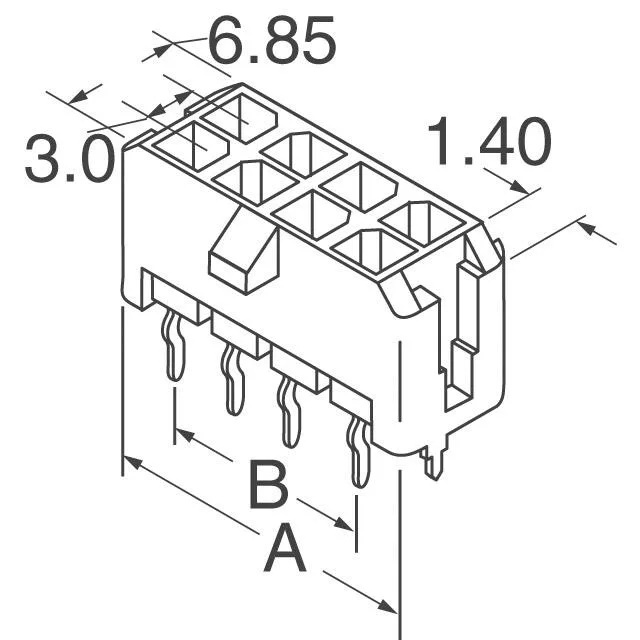
The Molex 430450812 is an 8-circuit, dual-row header from the Micro-Fit 3.0 43045 series, designed for board-to-wire power interconnects. It mates with the matching Micro-Fit 3.0 receptacle housings and crimp terminals to form a locked harness assembly. The 3.00 mm pitch and 8 A per circuit rating suit it for moderate-current distribution in automotive, industrial, medical, and telecom equipment — the 600 V voltage rating gives plenty of headroom for 48 V or 400 V bus applications without creepage concerns. The housing is shrouded on all four walls with a locking ramp, so the connection stays mated under vibration; a built-in board guide helps align the header during wave-solder placement.
What the ratings mean for your build
The 8 A per circuit is the headline current at the connector level — each tin-plated contact carries that load up to the temperature rise limit of the LCP housing. For a real harness, derate if ambient in the enclosure runs above 105 °C or if multiple circuits are fully loaded side-by-side. The 100.0 µin tin plating on the mating surface is thick enough for a few dozen mating cycles in a production environment; it's not a high-cycle gold contact, but for a power interconnect that mates once at harness build and stays locked, tin is the right call. The 3.00 mm pitch and 0.118" row spacing give enough room for 20-24 AWG wire routing without crowding the board edge.
Mating and termination
This is a through-hole header with kinked solder tails — the kink provides a press-fit retention in the plated through-hole before wave solder, so the part stays put during assembly. It mates with any Micro-Fit 3.0 receptacle housing (e.g., the 43025 series) loaded with the matching crimp terminals. The locking ramp on the header engages the receptacle's latch for a positive lock; the 4-wall shrouding protects the pins from damage and prevents misalignment during blind mating.