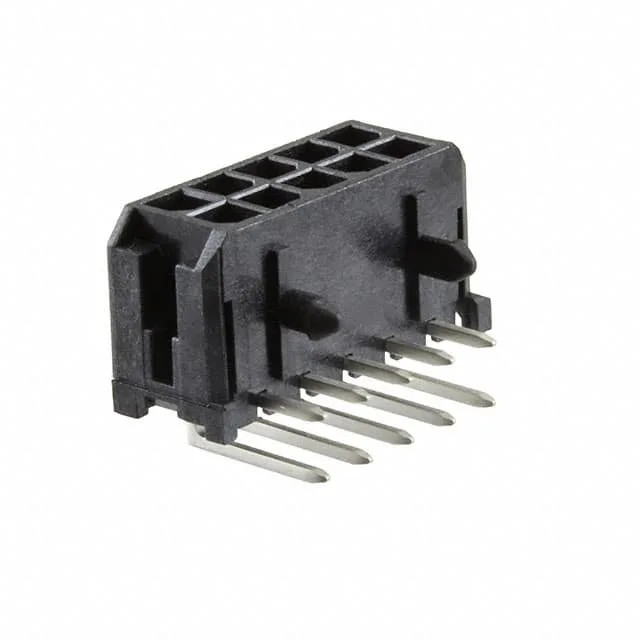
The Molex 430451002 is the 10-circuit member of the Micro-Fit 3.0 43045 series — a dual-row board-to-cable header with a locking ramp and board-lock feature. The mating interface carries gold-plated contacts rated 8 A per circuit at up to 600 V, while the solder tails are tin-plated to the board side. The 4-wall shroud covers the full pin array, which gives the connector its ruggedised reputation in automotive and industrial harness environments where accidental pin damage or mis-mating are genuine field risks. The 3.00 mm pitch sits squarely in the medium-density class — dense enough for multi-circuit signal or power distribution on a single header, but not so tight that it demands precision placement beyond ordinary through-hole assembly. The 0.290-inch insulation height and glass-filled LCP body keep the header stable across the full -40 to 105 °C operating window, and the UL94 V-0 flammability rating clears it for enclosed equipment enclosures.
Mating interface
This is a board-to-cable male header — it mates with the matching Micro-Fit 3.0 wire-to-board receptacle housings in the same 43045 series. The primary latch on the housing plus the locking ramp on this header give a two-point retention system that holds the mated assembly under cable pull and vibration.
Contact plating — what the dual-finish means
Gold on the mating face at 30.0 µin (0.76 µm) is the standard finish grade for this series — it covers the wearable interface that cycles each time the connector is mated in the field. Tin on the solder tail at 100.0 µin (2.54 µm) gives superior solderability and resists whisker formation on the through-hole side. The plating split is deliberate: the gold grade governs re-mating durability; the tin grade governs the solder joint reliability over the product's installed life.
Where the 430451002 fits
The series covers automotive under-hood signal distribution, industrial automation control modules, medical equipment power rails, and general-purpose enclosed electronics. The board-lock feature is the detail that separates it from a plain friction-fit header — it anchors the header body to the PCB before wave or hand-solder, which matters in any application where the cable side sees repeated flex or vibration stress during service.
