What the key ratings mean for the fit
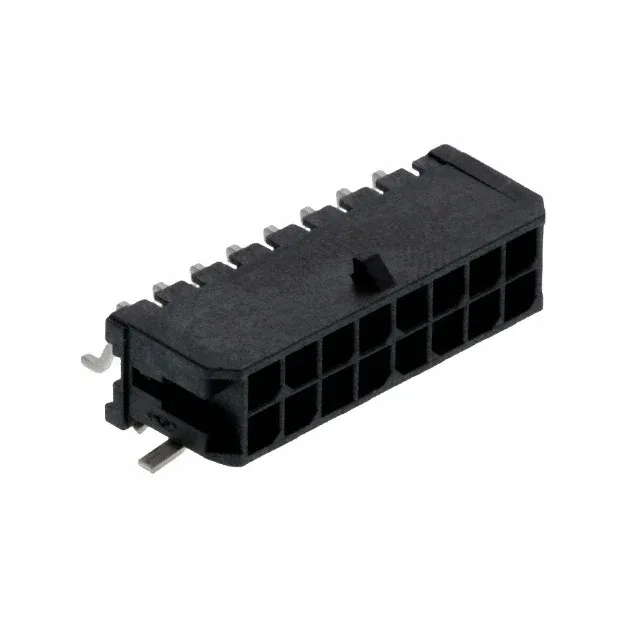
The 430451611: 8 A per circuit at up to 600 V — the current rating is the limiting factor on signal-versus-power duty, and 8 A is well above what most logic-level or low-power signal lines need. If the application is power distribution inside a harness, this header has the headroom; if it is strictly signal, the same rating simply means the contact is oversized rather than marginal. The contact finish split is deliberate: gold at 30.0 µin (0.76 µm) on the mating face gives wear resistance across the connector's lifecycle, while tin at 100.0 µin (2.54 µm) on the solder post gives a robust, low-resistance solder joint that reflows well on SMT lines. The tin thickness on the post also supports the solder retention feature — it resists pull-off during board handling and thermal cycling more than a thin flash-plate finish would. The 4-wall shroud and locking ramp are the mechanical keying features — they prevent the receptacle housing from being installed upside-down and lock it in place with a positive audible click. The shroud also acts as the primary polarisation means, so confirm the mating-half key orientation before specifying; the locking ramp secures it against vibration once seated. Insulation height of 0.290 inch (7.37 mm) matters for the board-side keep-out envelope — the right-angle orientation means the header sits flush to the board edge with the housing extending above, so check the enclosure clearance against that 7.37 mm standoff. Operating temperature range is -40°C to 105°C, and the LCP housing material carries a UL94 V-0 flammability rating — solid for enclosed equipment and automotive harness runs where flame-retardancy is a design requirement.
Where this connector class is used
Micro-Fit 3.0 headers are workhorse interconnects in automotive harness runs, industrial automation control panels, and medical equipment — anywhere a compact 3.00 mm pitch power bus needs to transition from board-level distribution to discrete wire. The 600 V rating and dual-row layout make it common on the board input side of power supplies, HVAC controllers, and motor-drive modules where multiple 8 A circuits need to feed into a single header footprint rather than individual wire terminations.
