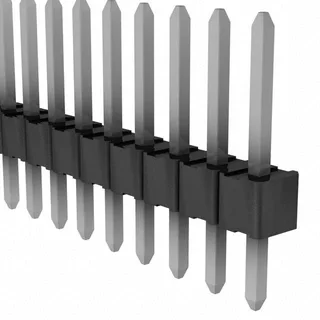
0022284352
Molex
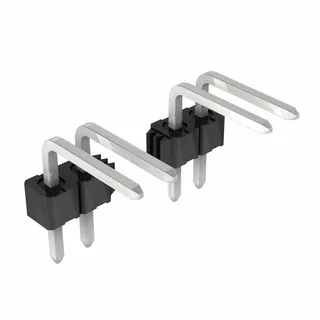
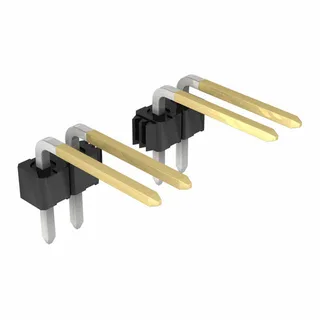
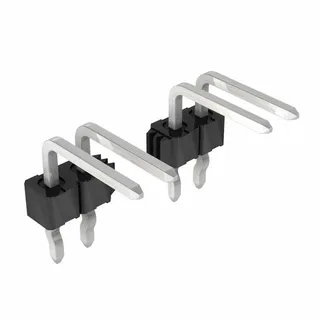
KK254, 42375UnshroudedBoard to Board or Cable
Ref. price$1.5000
Lead time on requestGet quote ›
367 variants · Molex
If you have ever plugged a fan header onto a motherboard, connected a front-panel USB cable, or wired up a benchtop prototype on 0.100" perfboard, you have probably touched a Molex KK 254 connector without knowing it. The KK 254 series is Molex's 2.54 mm (0.100 inch) pitch wire-to-board and board-to-board interconnect system, and with 367 active variants it covers everything from a basic 2-pin friction-lock header to a 28-circuit polarized housing with crimp terminals and pre-assembled cable harnesses.
At its core, KK 254 solves one problem: getting signals and low-current power from a wiring harness onto a PCB, repeatably and without soldering each wire directly to the board. The 2.54 mm pitch means you can drop these headers into standard 0.100" grid layouts — they sit naturally alongside DIP ICs, resistor arrays, and breadboard-compatible modules.
The system splits into three pieces you mix and match:
Vs. generic 0.100" breakaway pin headers: Generic pin strips have no polarization, no friction lock, and no retention ramp. If you ship a product with a generic header, the connector can be plugged in backwards at the factory and the board comes back as a warranty return. KK 254 housings have a physical key that prevents reverse insertion.
Vs. Molex SL (Series 70430, also 2.54 mm): SL is a latching connector — it has a positive latch that you squeeze to release. KK 254 uses friction only. SL costs more per mated pair but is the right pick when the connector faces outward on a panel and someone might pull on the cable. KK 254 makes more sense for internal connections inside a closed chassis.
| Parameter | KK 254 range |
|---|---|
| Pitch | 2.54 mm (0.100 in) |
| Circuits | 2 to 28 (single row) |
| Current rating | 4 A max per circuit (18 AWG, tin) |
| Voltage rating | 250 V AC/DC |
| Contact resistance | 10 mΩ max (initial) |
| Wire gauge | 18-30 AWG (varies by terminal series) |
| Mating cycles | 25 (tin), 100 (gold) |
| Operating temperature | -40 C to +105 C (nylon 6/6 housing) |
| PCB thickness | 1.2 to 1.6 mm (through-hole) |
| Terminal plating | Tin (matte), select-gold (0.38 um Au over Ni) |
| Flammability | UL 94V-0 (housing), UL 94V-2 (some terminal series) |
Start with the circuit count. KK 254 housings are not stackable end-to-end like some Hirose or JST series — if you need 16 positions, buy a 16-circuit header and housing, not two 8s. Count your signals, add one spare ground pin, and that is your circuit count.
Pick tin vs. gold. Gold is about 2-3x the per-contact cost. It matters when: the device operates outdoors or in an unheated warehouse (condensation corrodes tin), the connector may sit unmated for months during storage, or the mating cycle count exceeds 25 over the product's life. For a TV that gets assembled once and never touched again, tin is the right economic choice.
Choose orientation early. Right-angle headers let you lay the wires flat against the board — important in 1U rack enclosures and slimline gear. Vertical headers pack more circuits per square centimeter of board area but add to the Z-height. If your mechanical team has not finalized the enclosure, order samples of both and test-fit.
Crimp terminal gauge range. Series 2759 covers 22-30 AWG, Series 41572 covers 18-24 AWG. Check the actual wire you plan to use, not the gauge you wrote in the spec. A UL 1007 22 AWG wire with insulation is roughly 1.5 mm in OD; the terminal's insulation crimp barrel must close around it. Getting this wrong is the number one reason KK 254 assemblies fail a pull test on the first prototype run.
Molex ships KK 254 in standard packaging: headers come in bags (small quantities) or tape-and-reel (pick-and-place), housings in bags, and crimp terminals on reel. Minimum order quantities are typically 100 for terminals and 10 for housings. Lead times on popular configurations (2-8 circuits, tin plating) are normally 2-4 weeks from distribution; odd circuit counts (13, 17, 19) and gold-plated variants can push to 8-12 weeks. Second-source equivalents exist from TE Connectivity (MTA-100) and JST (NH series) with the same 2.54 mm pitch, but neither is a drop-in mechanical replacement — the polarization rib profile and terminal lance geometry are different, so cross-sourcing requires re-qualification.
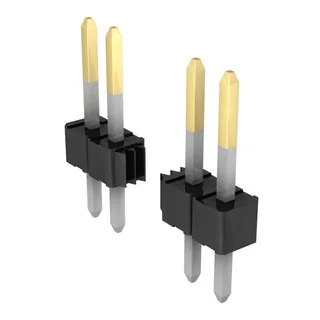
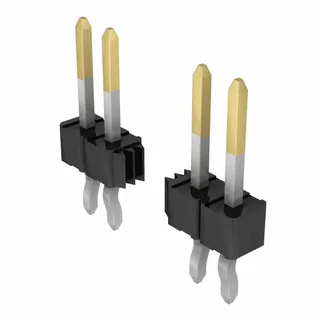
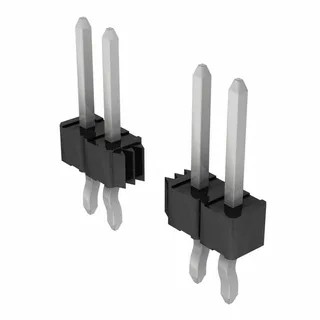
The Molex KK 254 2.54mm Header series groups 367 related part numbers, each listed with full specifications, a datasheet where available, and an RFQ option. The listed variants share a common contact finish - mating of Tin, contact finish - post of Tin and contact shape of Square. Variants differ by applications, connector type and contact finish thickness - mating, so you can match the exact applications your application requires using the selection guide below.
| Parameter | 0022022115 | 0022022165 | 0022027043 | 0022027053 | 0022032073 | 0022032087 |
|---|---|---|---|---|---|---|
| Applications | Automotive, General Purpose, Medical, Telecommunications | Automotive, General Purpose, Medical, Telecommunications | Automotive, General Purpose, Medical, Telecommunications | Automotive, General Purpose, Medical, Telecommunications | Automotive, General Purpose, Medical, Telecommunications | Automotive, General Purpose, Medical, Telecommunications |
| Connector type | Receptacle | Receptacle | Receptacle | Receptacle | Header | Header |
| Contact finish thickness - mating | 100.0µin (2.54µm) | 100.0µin (2.54µm) | 100.0µin (2.54µm) | 100.0µin (2.54µm) | 60.0µin (1.52µm) | 60.0µin (1.52µm) |
| Contact finish thickness - post | 100.0µin (2.54µm) | 100.0µin (2.54µm) | 100.0µin (2.54µm) | 100.0µin (2.54µm) | 60.0µin (1.52µm) | 60.0µin (1.52µm) |
| Contact length - post | 0.132\" (3.35mm) | 0.132\" (3.35mm) | 0.132\" (3.35mm) | 0.132\" (3.35mm) | 0.122\" (3.10mm) | 0.135\" (3.43mm) |
| Contact material | Brass | Brass | Brass | Brass | - | - |
| Current rating | 2.5A | 2.5A | 2.5A | 2.5A | - | - |
| Fastening type | Push-Pull | Push-Pull | Push-Pull | Push-Pull | Push-Pull | Push-Pull |
Request a quote on any KK 254 2.54mm Header part number and we confirm price, availability and lead time per line — including end-of-life and allocation-constrained variants.
What buyers ask when they search KK 254 2.54mm Header Pin Header Pitch Positions Plating.
Molex
Molex
Molex
Molex
Molex
Molex
Molex
Molex
Molex
Molex
Molex
Molex
Molex
Molex
Molex
Molex
Molex
Molex
Molex
Molex
Molex
Molex
Molex
Molex
Molex
Molex
Molex
Molex
Molex
Molex
Molex
Molex