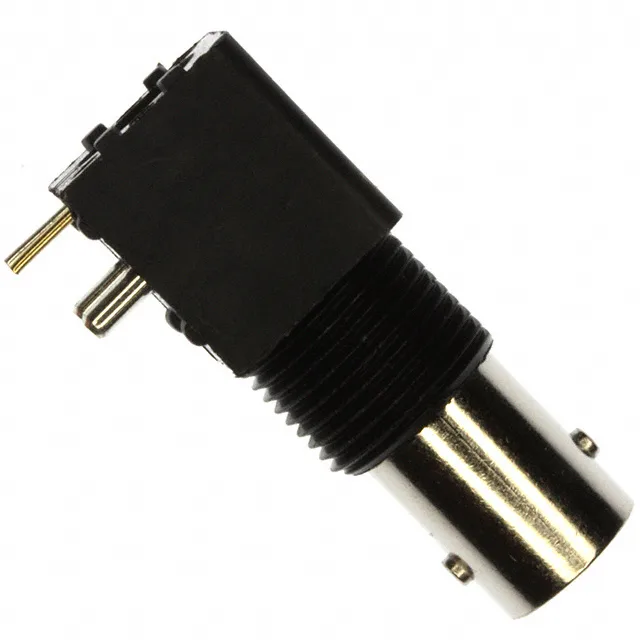
It's a right-angle, through-hole part that also panel-mounts through a bulkhead with a front-side nut, so you can land it on a PCB and bolt it to a chassis in one go. The nickel-plated zinc die-cast body and gold-plated brass centre contact are standard for a clean signal path up to 2 GHz.
The 75 Ohm impedance is the headline here — this is not a 50 Ohm BNC. Mating a 75 Ohm jack to a 50 Ohm plug creates a 25 % impedance mismatch that reflects signal at the interface, killing return loss above a few MHz. Stick with 75 Ohm cable and 75 Ohm mating plugs for video or data paths. The 2 GHz max frequency is the practical ceiling; above that the connector geometry starts to radiate. 500 mating cycles is standard for a bayonet-lock BNC — the coupling nut wears the detent over time, but for a panel jack that sees occasional reconnects in test or distribution gear it's fine.
The shield terminates by soldering to the body — no crimp ferrule. The dielectric is polyethylene, which gives a stable 75 Ohm line through the interface. The board guide and isolated features help align the part during assembly and keep the signal path clean.
Sourcing reality — obsolete part
No official successor order code is on record. If you're open to a parametric alternative, a 75 Ohm BNC from the same series with a different mounting or plating may be available; check the 1634624 base number for active siblings.