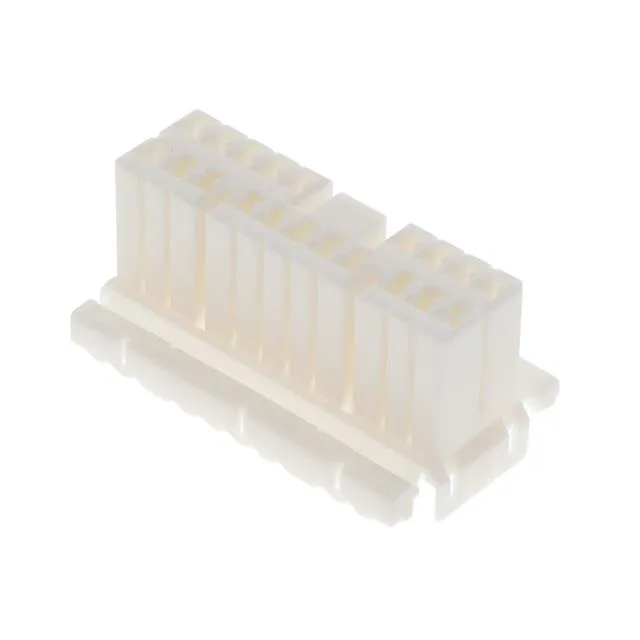
The Latch Holder — Why It Matters for Vibration
That means the mated pair clicks together and stays mated under vibration — the latch resists the back-and-forth shear that can walk a friction-fit connector open over time. For a harness routed near an engine or on a moving industrial arm, that latch is the difference between a connection that stays seated and one that intermittently drops a signal line.
This is a female socket housing, so it mates with the corresponding Multi-Lock male header (pin header). The 20 positions are arranged in 2 rows with a 5.90 mm row spacing. Termination is crimp — you insert the pre-crimped female terminal into the cavity until the latch tang locks, then pull a light tug to confirm retention. The housing itself is free-hanging (in-line), meaning it floats in the harness rather than being panel-mounted or board-locked. No contacts are included with this order code; you need to source the TE-specified female crimp terminal separately.
Sourcing Reality
The most common procurement mistake on this line is ordering the housing alone and forgetting the crimp contacts — the BOM must list both.