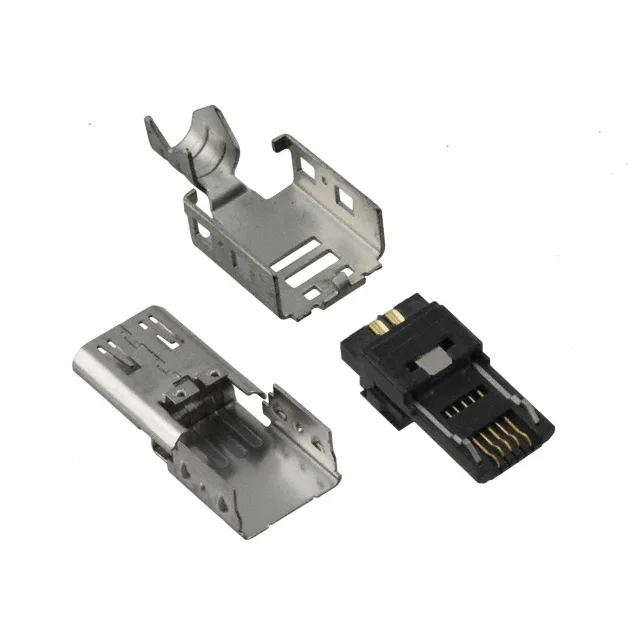
It carries 5 contacts in the standard micro-B shell profile — the fifth contact being the ID pin that distinguishes micro B from micro A on the device side. Rated for 30V and a multi-tier current draw of 0.5A, 1A, and 1.8A across different pins (VBUS carries the higher current; data pins stay at the lower end), this plug is built for USB 2.0 signal and power delivery in a compact in-line form factor.
The 10,000-Cycle Rating — What It Means
A standard micro USB connector typically rates 1,000 to 5,000 mating cycles. The 10,000-cycle spec on this plug means the contact spring and plating are engineered for heavy reconnect duty — think a programming jig that gets cycled every shift, a data-collection handheld that docks repeatedly, or a field-service cable that sees daily plugging. The gold finish on the contacts supports this: gold resists the fretting corrosion that would wear through a tin surface over thousands of mates. If your assembly sees frequent connect/disconnect, this plug is overbuilt for the job — if it's a one-time ship-and-forget cable, the cycle life is more than you need, but it won't hurt.
Obsolete per TE Connectivity lifecycle status. No official replacement order code documented.
As a free-hanging (in-line) plug, this connector terminates to a cable via solder — the 5 contacts are soldered to the wire ends, then the overmold or strain-relief boot completes the cable assembly. It mates with any standard USB micro B receptacle — the board-mounted jack found on phones, tablets, data loggers, and industrial equipment. The shell/shielding material is steel, stainless, providing EMI containment and mechanical robustness for the in-line cable end. There is no latch mechanism beyond the friction fit of the micro B interface; the 10,000-cycle rating suggests the shell retention is tighter than a budget connector to maintain contact force over the connector's life.