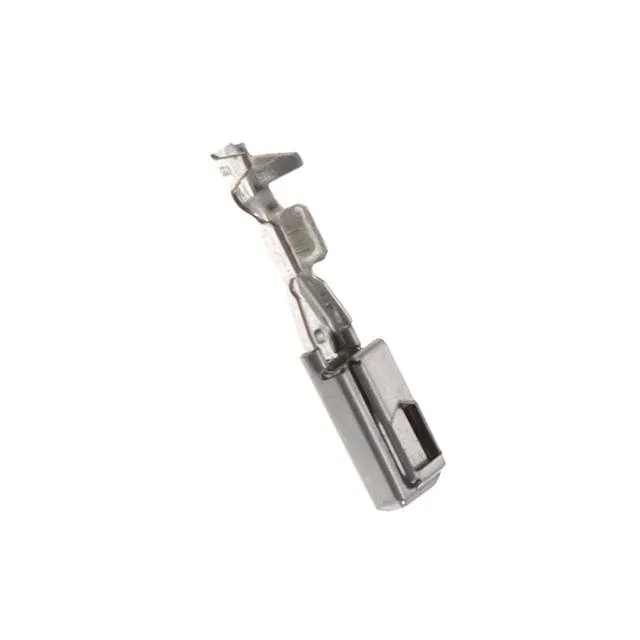
Harness-Ready 10-Way Receptacle with Secondary Locking
These features prevent the connector from backing out of the header and stop a terminal from backing out of the cavity — both critical in high-vibration environments like automotive engine compartments or industrial machinery.
What the CPA and TPA Mean for the Build
The CPA is a sliding lock on the housing top that engages only when the receptacle is fully mated to the header — if the connector is only partially seated, the CPA won't click into place, giving a positive go/no-go check on the assembly line. Together they make this connector suited for harnesses that see constant vibration, thermal cycling, or field service where a technician might tug on a wire.
Mating is with a 0.64 series male header (sold separately) that uses a matching latch lock. The keying is defined by the "Key A" designation in the description — this means the housing has a specific polarization rib that prevents mating with a Key B or Key C header, reducing mis-mate risk on the line.