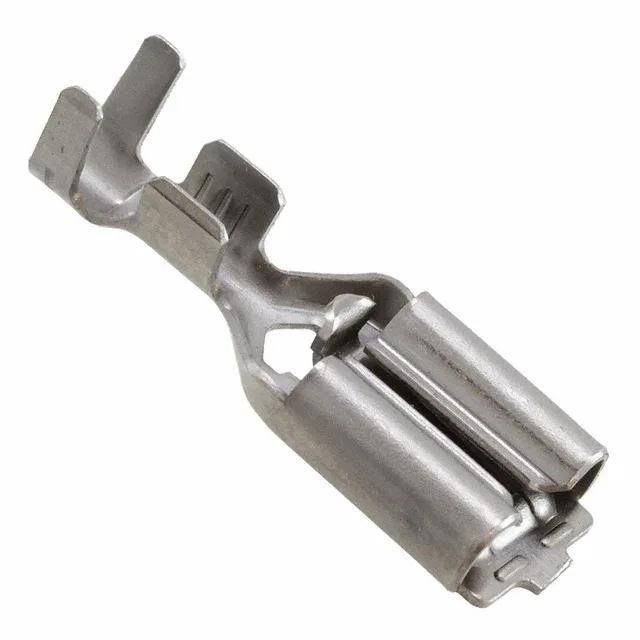
TE Connectivity AMP Connectors 175164-1 — Quick-Disconnect Terminals

TE 175164-1 Positive Lock EX QC Receptacle 0.250"

MPN175164-1
Active

TE Connectivity AMP Connectors Positive Lock EX quick-disconnect receptacle, order code 175164-1, female, 0.250" (6.35mm) tab width, 14-18 AWG, non-insulated, steel contact, crimp termination, free hanging.

$0.2900Ref. price · indicative, final on quote
RoHSROHS3 Compliant
SeriesPositive Lock EX
Source DocumentedChannel stated on listing & quote
Condition PhotosReal unit photos / video on request
WhatsApp AnswersFast human replies for stock & sourcing questions
Worldwide DispatchDHL/FedEx — transit quoted per order
Independent China distributor & sourcing agent· Listing updated Aug 2026

Specifications

175164-1 specifications
ParameterValue
SeriesPositive Lock EX
MountingFree Hanging (In-Line)
Terminal typeStandard
Wire gauge14-18 AWG
Tab width0.250\" (6.35mm)
Contact materialSteel
GenderFemale
PackageTape & Reel (TR) Cut Tape (CT)
InsulationNon-Insulated
Tab length0.307\" (7.80mm)
TerminationCrimp
Tab thickness0.020\" (0.51mm)
Length - overall0.835\" (21.20mm)
Insulation diameter0.087\" ~ 0.134\" (2.21mm ~ 3.40mm)

Product details

Quick-disconnect receptacle, 0.250" tab

The 175164-1: It crimps onto 14-18 AWG wire and hangs free in-line; the steel contact carries no insulation sleeve.

Tab-width selection in the Positive Lock EX line

The 175164-1 uses a 0.250" tab width, while the 175034-1 and 175032-1 in the same series use a narrower 0.187" tab — the wire gauge range and overall length differ accordingly, so the tab width must match the mating male blade.

Frequently asked questions

What compliance documentation is available for 175164-1?

The part is ROHS3 Compliant per the manufacturer's listing.

Will 175164-1 fit a panel designed for 175034-1?

No — the 175164-1 uses a 0.250" tab width, while the 175034-1 uses a 0.187" tab. The tab thickness differs as well (0.020" vs 0.020" — same here, but the width mismatch prevents interchange without changing the mating blade.