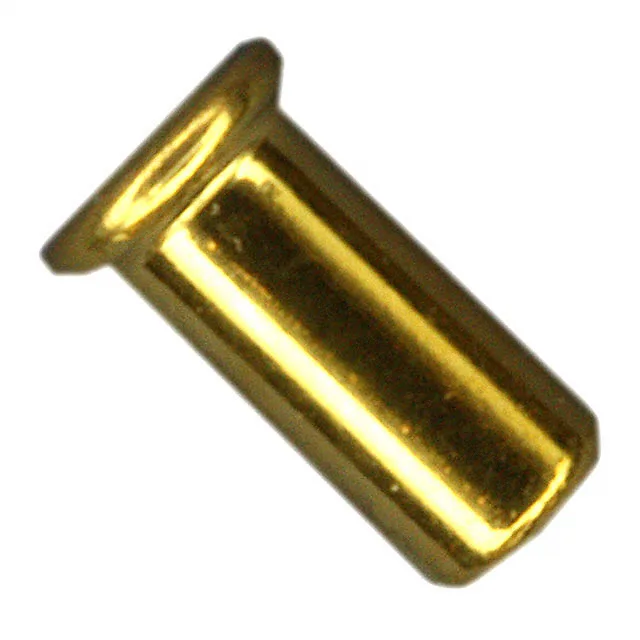
TE Connectivity AMP Connectors 2-331677-6 — PCB Pin Sockets

2-331677-6 TE Connectivity PCB Pin Socket – Gold

MPN2-331677-6
Active

TE Connectivity AMP Connectors 2-331677-6, PCB pin socket, accepts 0.030" ~ 0.033" pin diameter, gold-plated beryllium copper contact, solder termination, closed bottom, no tail, bulk package.

$0.8000Ref. price · indicative, final on quote
RoHSROHS3 Compliant
Sourced new & surplus through independent channelsAuthenticity-screened · ESD-safe packingListing updated Aug 2026

Specifications

2-331677-6 specifications
ParameterValue
Tail typeNo Tail
Mounting hole diameter0.062\" ~ 0.063\" (1.57mm ~ 1.60mm)
Operating temperature-65°C ~ 125°C
Socket depth0.125\" (3.18mm)
Contact materialBeryllium Copper
PackageBulk
FeaturesClosed Bottom
TerminationSolder
Contact finishGold
Flange diameter0.080\" (2.03mm)
Length - overall0.138\" (3.51mm)
Accepts pin diameter0.030\" ~ 0.033\" (0.76mm ~ 0.84mm)
Contact finish thickness30.0µin (0.76µm)

Product details

What pin diameter does 2-331677-6 accept?

This PCB pin socket accepts pin diameters from 0.030" to 0.033" (0.76 mm to 0.84 mm).

How does the closed bottom affect installation?

The closed-bottom design means the socket has a solid floor — solder won't wick up into the contact area during wave or hand soldering. That keeps the pin-entry zone clean and prevents the pin from bottoming out on a solder ball. The mounting hole diameter is 0.062" to 0.063" (1.57 mm to 1.60 mm), so drill or spec the PCB accordingly.

Temperature range and termination

Termination is solder — the no-tail body sits flush on the board, and the 0.138" overall length keeps the profile low. Bulk packaging means you get loose parts, not a tape-and-reel; fine for hand assembly or low-volume builds.

Frequently asked questions

What is the pin diameter range for 2-331677-6?

The socket accepts pin diameters from 0.030" to 0.033" (0.76 mm to 0.84 mm).

Is 2-331677-6 RoHS compliant?

Yes, it is ROHS3 Compliant.

Does 2-331677-6 require a soldering tool?

Yes, termination is solder — the no-tail body sits flush on the board and requires a soldering iron or wave solder process.