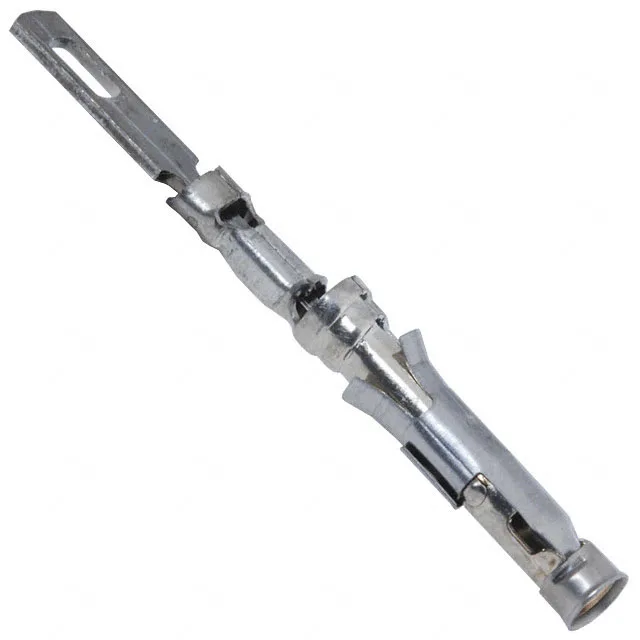
It's designed to be hand-soldered or dip-soldered into a wire or PCB, then inserted into a Multimate III+ housing cavity. The tin-lead plating at 50.0 µinch (1.27 µm) gives solid corrosion resistance for industrial environments, but the lead content means it does not meet RoHS requirements — a key check if your BOM or end-product ships into EU or RoHS-regulated markets.
Mating and Housing Fit
This socket mates with the Type III+ pin contacts (the stamped pin counterpart in the same series) and drops into any Multimate III+ housing that accepts a stamped socket — typically the CPC (Circular Plastic Connector) and M-Series rectangular housings. The solder eyelet lets you terminate the wire first, then load the contact into the housing; no special crimp tool needed, just a soldering iron and the correct gauge wire.