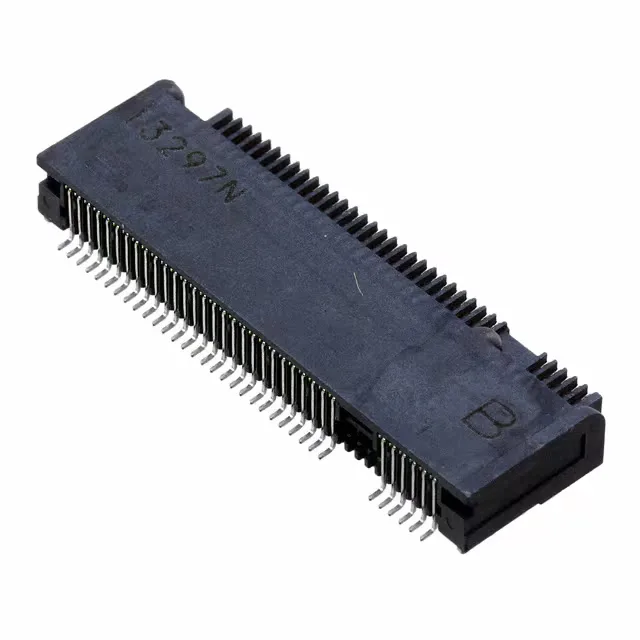
TE Connectivity AMP Connectors 2199119-1 — Card-Edge Connectors

TE 2199119-1 M.2 Female Connector, 67 Pos, 0.50mm Pitch

MPN2199119-1
Active

TE Connectivity, M.2 (NGFF) female connector, 2199119-1, 67 positions, 0.50mm pitch, 2 rows, right-angle SMT, gold flash contacts, board guide.

$1.0700Ref. price · indicative, final on quote
RoHSRoHS Compliant
Source DocumentedChannel stated on listing & quote
Condition PhotosReal unit photos / video on request
WhatsApp AnswersFast human replies for stock & sourcing questions
Worldwide DispatchDHL/FedEx — transit quoted per order
Independent supplier — new & surplus connector stock· Listing updated Aug 2026

Specifications

2199119-1 specifications
ParameterValue
Card typeM.2 (NGFF) Mini Card
MountingSurface Mount, Right Angle
Operating temperature-40°C ~ 80°C
ColorBlack
Contact materialCopper Alloy
Material - insulationThermoplastic
Pitch0.020\" (0.50mm)
GenderFemale
PackageTape & Reel (TR) Cut Tape (CT)
FeaturesBoard Guide
Read outDual
TerminationSolder
Contact finishGold
Rows2
Positions67
Contact finish thicknessFlash

Product details

M.2 Socket for NGFF Cards — 67-Position Right-Angle SMT

The TE Connectivity 2199119-1 is a 67-position female M.2 (NGFF) connector, the standard socket for M.2 solid-state drives and wireless modules. The 0.50 mm pitch matches the edge-finger spacing on the card, and the right-angle surface-mount orientation places the card parallel to the motherboard — the typical layout for embedded and laptop designs. The dual-row readout with board guide aligns the card during insertion and takes shear loads off the signal contacts.

This is the most common position count for M.2 sockets — the 67 contacts cover the power, ground, and PCIe/SATA lanes on a standard M.2 2280 card. The board guide adds a locating feature that helps the pick-and-place machine align the part during reflow.

Frequently asked questions

Is the 2199119-1 compatible with M.2 SATA SSDs?

Yes, the 67-position B+M key socket accepts both SATA and PCIe M.2 cards with the same edge-finger layout. The connector itself does not enforce the protocol — the host controller determines SATA vs PCIe operation.