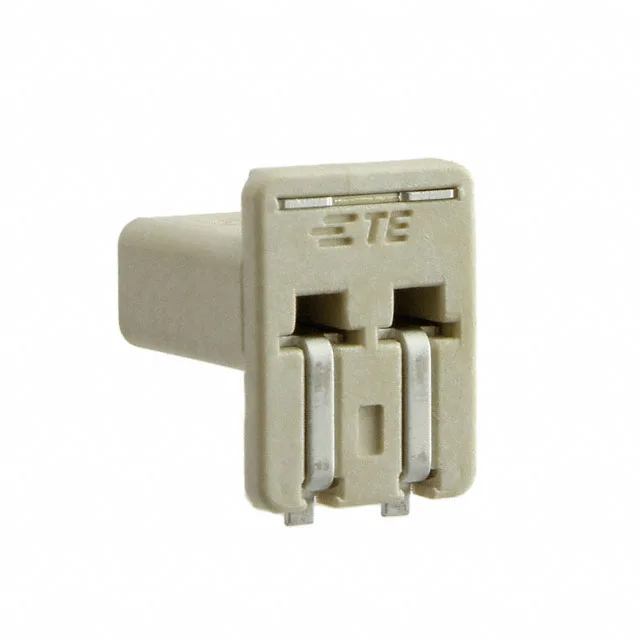
It sits on a 0.130" (3.30mm) pitch, which is a non-standard spacing that won't match a 2.54mm or 3.96mm board footprint, so the PCB layout has to be designed around this specific dimension. Rated 3A per circuit at 400V, with tin-plated copper alloy contacts, this connector is built for low-cost, moderate-current board-to-wire interconnects in indoor commercial equipment like LED lighting panels, small appliance control boards, and HVAC sensor harnesses.
Mounting and Termination — Three Options, One Part
The 2213189-1 supports three mounting methods in a single body: Surface Mount, Bottom Entry, and Through Board. That flexibility means one part number can cover different assembly lines, but each method requires a different PCB footprint and reflow profile. The solder retention feature — extra metal tabs that hold the part to the board during reflow — is critical here, especially for the bottom-entry variant where the connector body sits below the board surface and the solder joints take the full insertion force of the poke-in wire. Without those retention tabs, the part can shift during reflow or lift when the wire is pushed home.
Wire Preparation and Gauge Fit
This receptacle accepts 18-22 AWG solid or stranded wire. The poke-in mechanism means the stripped wire end is the only interface — no crimp barrel to inspect, no applicator die to set up. The trade-off is that the wire retention depends entirely on the housing's internal spring tangs gripping the conductor, so consistent strip length and cleanly cut wire ends matter more here than with a crimped terminal. For 18 AWG stranded wire, the full strand bundle must be captured without fraying; a poor strip leaves strands outside the tang and the connection pulls loose under vibration.
No official cross-reference or second-source is on record from TE; the 1-2213614-1 is a different connector type (hermaphroditic blade and receptacle) on a 4.00mm pitch with gold contacts and 6A rating, so it is not a functional substitute for this poke-in wire receptacle.