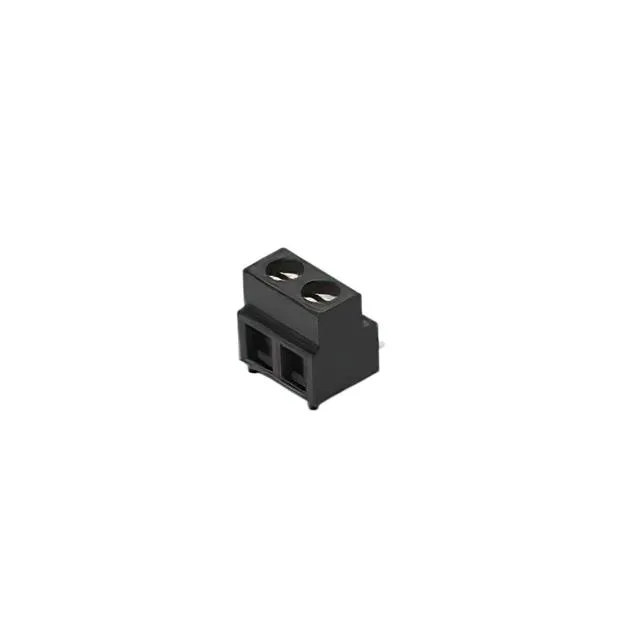
Sizing the board layout for this SMT terminal block
The wide pitch accommodates the M3 rising cage clamp mechanism — the screw torque spec of 0.5-0.6 Nm (4.4-5.3 Lb-In) means the board pads need enough copper area and anchor points to resist the mechanical load during wire termination. Rated 13.5 A per position at 300 V, this block is sized for a power distribution tap or a field-wired sensor supply, not a signal-level interconnect. The 16-30 AWG wire range covers solid and stranded conductors; the rising cage clamp grips the stripped wire against the current bar, and the nickel-plated copper alloy clamp and screw resist corrosion in industrial cabinet environments.
Wiring it: termination and torque
Wire termination uses a screw-driven rising cage clamp. Strip the wire to the recommended length, insert it into the clamp opening, and tighten the M3 screw to 0.5-0.6 Nm. The cage rises and clamps the conductor against the current bar — no ferrule required for stranded wire, though a ferrule helps with fine-stranded 16 AWG. The contacts are copper alloy with a nickel-tin plating. Tin plating is adequate for the rated current and the limited number of termination cycles typical of a fixed-installation terminal block — the screw clamp is the wear item, not the contact surface. The nickel underplate prevents copper migration at elevated temperatures.