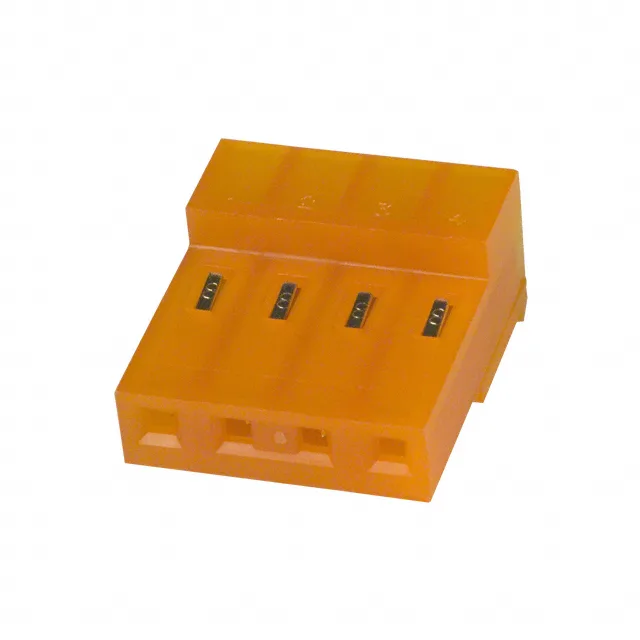
It accepts 18 AWG wire, and the tin-plated female sockets (80.0µin / 2.03µm thickness) are designed for the MTA-156 header pin interface.
IDC termination and wiring — what the 18 AWG and closed end mean on the bench
For 18 AWG, the slot geometry is sized to cut through the insulation and grip the conductor without cold flow over time. The closed-end housing means the wire stops at the back wall of the last position, which prevents a stray strand from protruding past the connector body — useful when the harness is routed in a tight enclosure where exposed conductor could short to a chassis or another wire. Because this is a free-hanging connector, there is no board-mount retention feature; the strain relief comes from the IDC connection itself and any external cable tie or clamp the harness design adds.
Contact finish and duty — why the 80.0µin tin matters
The 80.0µin (2.03µm) tin contact finish is a thick tin layer, typical for MTA-156 connectors intended for a limited number of mating cycles — think a single connect/disconnect at the harness assembly point, then a permanent or semi-permanent installation. Tin-on-tin interfaces work well in dry-circuit or moderate-current signal applications but are not rated for frequent reconnection or corrosive environments. If the harness sees repeated field servicing, a gold-plated sibling in the MTA-156 family would be the correct choice; for a one-time build-and-forget wire-to-board run, this tin finish keeps the cost down while meeting the contact resistance requirement.