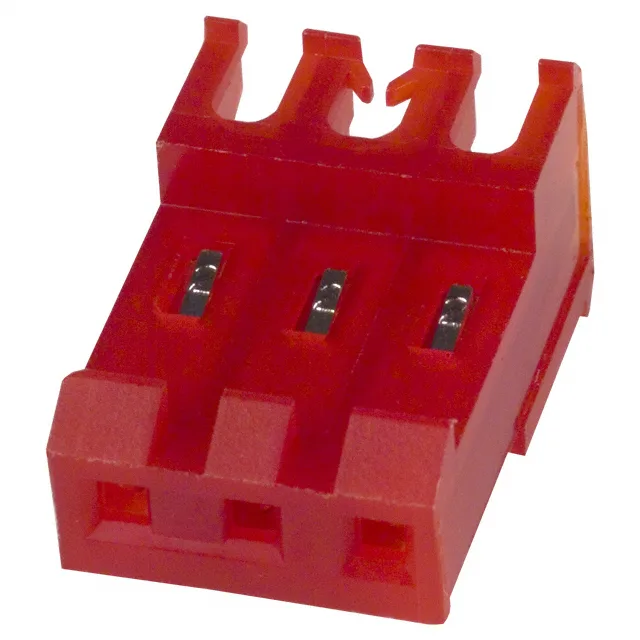
MTA-156 3-Position IDC Receptacle — What It Is
It mounts free-hanging (in-line), so it's meant to mate with a board-mounted header, not to bolt through a panel.
Termination and Tooling — IDC Reality Check
IDC termination presses 22 AWG wire into the slot, cutting insulation and contacting the conductor. The Feed Through feature lets cable pass straight through the connector body for daisy-chaining signals.
Contact Plating and Mating Life
That's a heavy tin coating — it's built for maybe a dozen or two mating cycles, not the hundreds you'd get from gold. If this is going into a panel that gets opened for rework every few months, the tin surface will oxidize and the contact resistance will drift. For that duty, you'd want a gold-plated sibling in the MTA-156 family.
Locking Ramp — Stays Mated Under Vibration
The locking ramp is a positive latch that clicks when the receptacle seats onto the header. It's the kind of retention you want in a machine tool or conveyor line where vibration can walk a friction-fit connector loose over a shift. A half-turn loose is a dropout — this ramp prevents that. No secondary lock or TPA here, but for a 3-position connector in a low-vibration cabinet, it's enough.