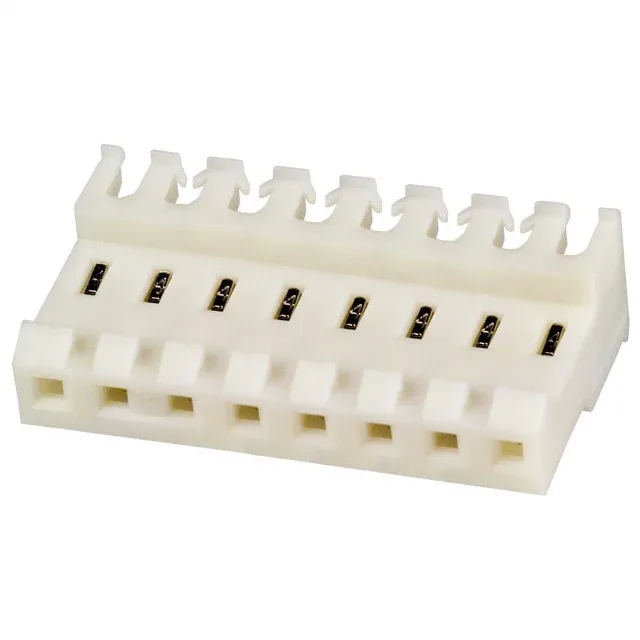
The free-hanging (in-line) mount and locking ramp fastening make it a practical choice for internal harnesses where the connector needs to stay mated under vibration — think power supplies, control panels, or appliance wiring where you terminate a ribbon cable to a board header and want a positive lock.
Termination and Contact Finish
It is fast for production runs and reliable when the wire gauge matches the spec. This part is set for 24 AWG, so stick to that size; forcing a different gauge risks a poor bite or damaged contacts. Tin is the workhorse for moderate mating cycles — it costs less than gold and holds up well in clean, indoor environments. The thickness here (80 µin) is above the typical 30-50 µin flash, so it will tolerate repeated insertions without wearing through to the base metal too quickly. For a harness that stays mated most of its life, this is the right call.
Mating and Housing Details
This is a receptacle with female socket contacts, so it mates with the matching MTA-156 male header (through-hole or vertical, depending on your board layout). The white color is not just cosmetic — in a multi-wire harness, a white housing stands out against black or gray connectors, making it easier for a technician to spot the right mate during assembly or troubleshooting. The feed-through feature means the IDC slot passes the wire through the housing, so you can daisy-chain multiple connectors on the same ribbon cable without cutting the run.