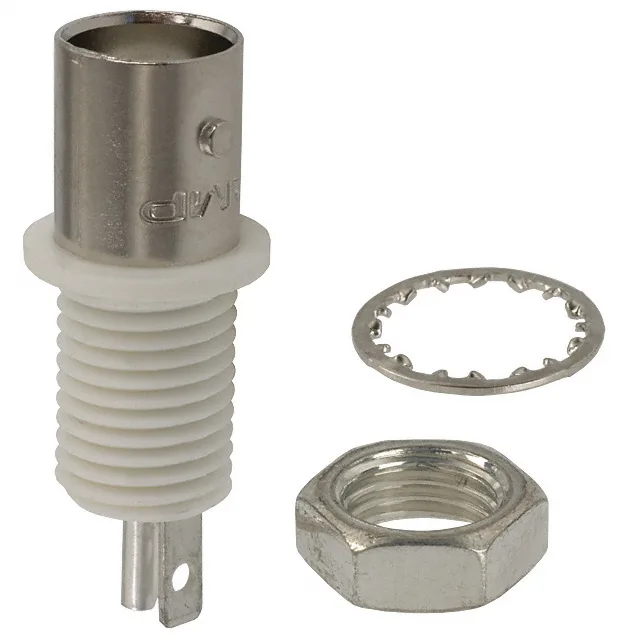
The 50 Ohm Path and the 4 GHz Ceiling
The 4 GHz max frequency tells you this is a conventional BNC, not a 75 Ohm video BNC or an 18 GHz precision type. At 4 GHz the VSWR starts to climb; if your signal path runs above that, you need an SMA or N-type. Below 4 GHz, this jack holds the line cleanly.
Mating Cycles and Contact Plating — What 500 Cycles Means in Practice
500 mating cycles is a solid reconnect life for a panel-mount BNC. The centre contact is silver-plated phosphor bronze — silver gives lower contact resistance than tin but wears faster than gold. At 500 cycles, the plating stays intact through daily connect-disconnect in a lab bench or test rack. If you need 1000+ cycles, you'd step to a gold-plated variant. The bayonet lock keeps the mating force consistent cycle to cycle, so the wear is predictable.
Temperature Range and the Zinc Body — Where This Jack Survives
The PBT dielectric holds its dielectric constant across the temperature band, so the 50 Ohm impedance stays stable.