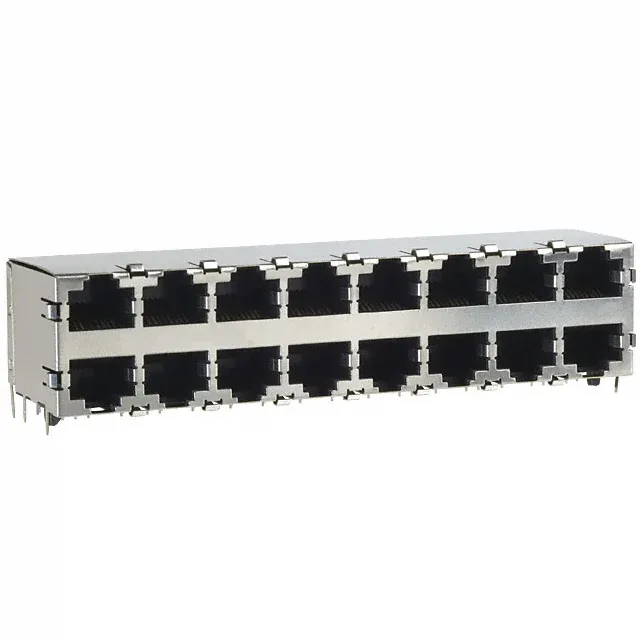
Its 16 ports in a single connector body allow dense Ethernet port aggregation on a network interface card or switch. The Cat5 rating means it supports 100 MHz signaling, sufficient for 100BASE-TX and 1000BASE-T networks in structured cabling environments. The shielding with EMI fingers and the up-and-down tab orientation help contain radiated emissions and provide mechanical retention in the panel cutout.
The Cat5 rating sets the upper frequency at 100 MHz — the connector will pass a 1000BASE-T link without signal degradation, but it is not rated for the 250 MHz of Cat5e or 500 MHz of Cat6. The 50.0µin gold thickness is a heavy plating: standard RJ45 jacks often use 30 µ" or less; the extra thickness here buys tolerance for repeated insertions in environments where corrosion resistance matters, such as unfiltered factory air or outdoor telecom cabinets.