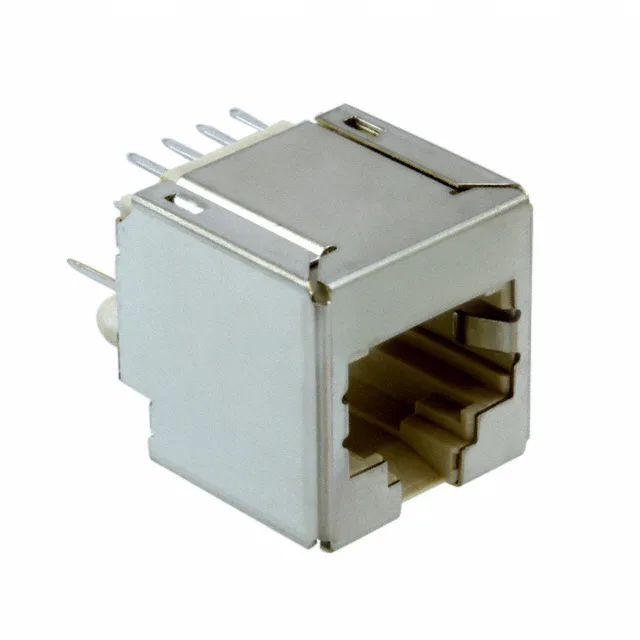
Shielded RJ45 Jack for Standard Ethernet Links
It is a single-port, single-row jack rated Cat5, meaning it supports 100 MHz signaling — the baseline for 100BASE-TX and 1000BASE-T Ethernet in structured cabling. The shielded shell bleeds common-mode noise to the PCB ground plane, which matters in industrial panels or data closets where adjacent power cabling couples interference into the signal pair. The gold-plated phosphor bronze contacts carry 50.0µin (1.27µm) of gold on the mating interface — sufficient for the moderate mating-cycle life of a fixed Ethernet port (typically 750–1500 cycles before the gold wears through). The -40°C ~ 85°C operating range covers unheated telecom cabinets and factory-floor enclosures without needing a specialty industrial jack.
Cat5 vs Cat5e — What the Rating Means for Your Link
The 6368150-2 is rated Cat5, not Cat5e. Cat5 certifies the jack to 100 MHz with a minimum of headroom; Cat5e adds tighter near-end crosstalk (NEXT) and return-loss margins at the same frequency. For a 100BASE-TX link (100 MHz, two pairs) the Cat5 rating is adequate. For 1000BASE-T (four-pair, 100 MHz) the Cat5e margin is preferred — the 6368150-2 will pass gigabit traffic in many installations, but the formal qualification stops at Cat5. If your cabling plant is specified to TIA/EIA-568-B.2-10 (Cat5e), select a Cat5e-rated jack instead.