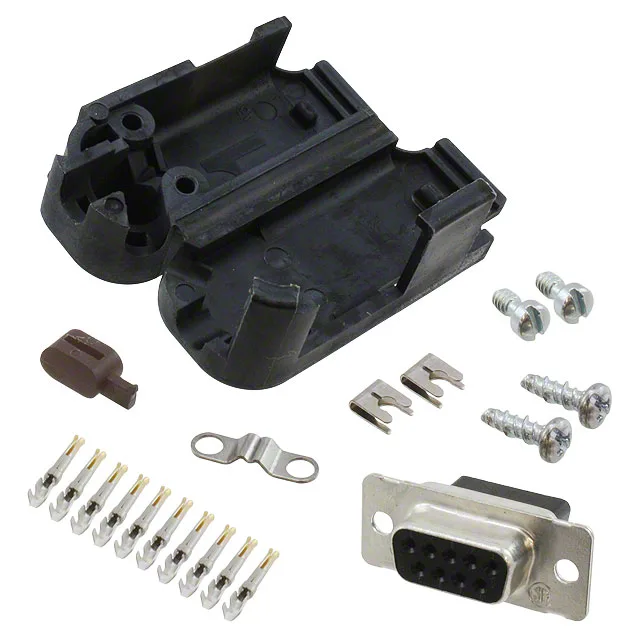
What This 9-Position D-Sub Receptacle Is
It uses crimp terminals for field-terminated wire harnesses — you build the cable one contact at a time, which is the right approach when you need to repair a loom without scrapping the whole assembly. The shell size is DE (E), the common layout for DB9 connectors, and it mounts free-hanging (in-line) with unthreaded flange holes for a backshell or hood. That temperature span covers most industrial cabinets and outdoor telecom shelters. The steel shell with tin plating gives basic EMI shielding when mated to a metal backshell.
The unthreaded flange accepts a standard D-sub backshell or hood with 4-40 screw-lock hardware — the same hardware used on every DB9 cable you've ever seen. Crimp the 20-24 AWG wire with the matching TE crimp tool, insert the contact until it seats, and pull a quick tug to confirm the retention latch caught. One contact at a time, and you've got a repairable cable.
The 749812-7 and the 749812-6 are both 9-position D-sub receptacles in the same AMPLIMITE HDP-20 series. The difference is the contact finish: the 749812-7 carries gold flash, while the 749812-6 uses tin plating. Gold flash gives better corrosion resistance and a higher mating cycle life — choose the 749812-7 for field-service cables that get reconnected regularly, and the 749812-6 for a one-time permanent install where cost matters more than cycle count.