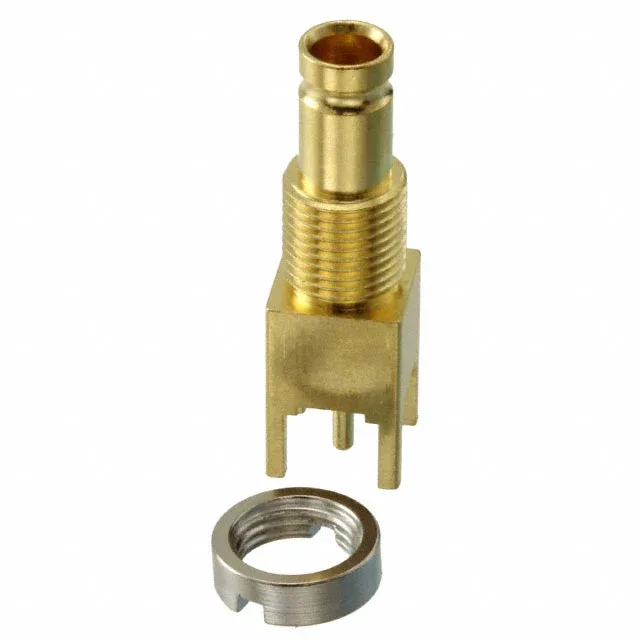
The TE Connectivity 8-1393670-3 is a 1.0/2.3 interface jack, female socket, built for 75 Ohm systems. It's a panel-mount, through-hole part with a bulkhead front-side nut — ships as two pieces: the connector body and the mounting nut. This is the 75 Ohm variant of the 1.0/2.3 series, so it's the right choice for video, broadcast, or data coax runs where the impedance needs to match the cable, not the more common 50 Ohm test gear.
Impedance and frequency — the 75 Ohm story
75 Ohms is the impedance for video (SDI), cable TV, and some data-over-coax standards. The 8-1393670-3 is rated to 2 GHz, which covers standard-def and HD-SDI up to 3G-SDI rates. The PTFE dielectric keeps the signal path stable across temperature. If you're working with 50 Ohm test equipment or SMA connectors, this won't mate — the 1.0/2.3 interface is physically different, and the impedance mismatch would cause reflections anyway.
The shield and centre contact both terminate with solder cups, so you'll need a soldering iron and a steady hand. The through-hole tails anchor into the PCB for mechanical stability. No crimp tool required, but the solder joint quality sets the RF performance.
Gold plating on the centre contact and beryllium copper base material give 500 mating cycles. That's enough for test points, patch panels, or equipment that gets reconfigured a few times a year. The push-pull fastening means no threads to cross or torque — just push to mate, pull to release. Keep the dust cap on when it's unmated; the gold is soft and grit will wear it.