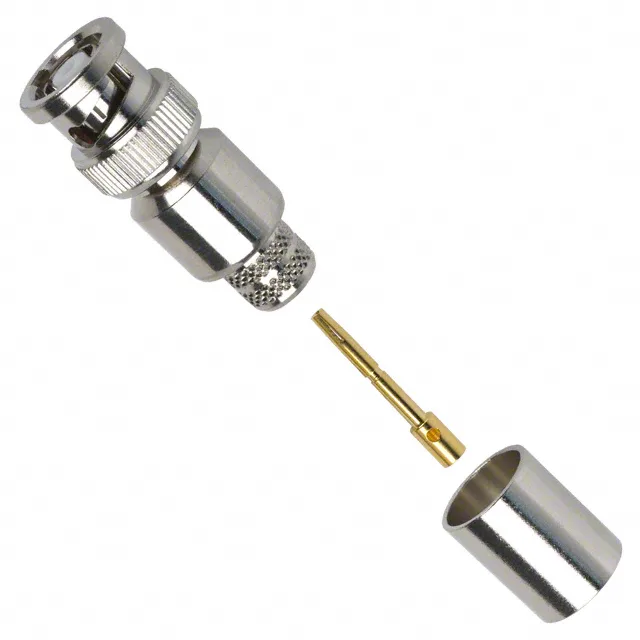
112563RP — Amphenol product photo

Amphenol RF 112563RP RP-BNC Plug, 4 GHz, 50 Ohm

MPN112563RP
Active

Amphenol RF RP-BNC plug, female socket, 50 Ohm, 4 GHz, 500 mating cycles, crimp termination, nickel-plated brass body, gold-plated phosphor bronze centre contact, PTFE dielectric, for Belden 8214, 9913, 9914, LMR-400.

$9.7697Ref. price · indicative, final on quote
StockContact for availability
MOQ1 pcs
  • New & original stockTraceable channels only — no mixed lots, no re-taped reels.
  • Factory packaging where availableSealed reels, trays and bags; cut quantities always stated on the quote.
  • Photo-verified countsEvery line counted and photographed before the box closes.
  • PayPal buyer protectionPay by T/T, PayPal or Payoneer — card payments covered end to end.

Specifications

112563RP Technical Specifications
ParameterValue
Mounting typeFree Hanging (In-Line)
Connector typePlug, Female Socket
Fastening typeBayonet Lock
Voltage rating500 V
Frequency - max4 GHz
Cable groupBelden 8214, 9913, 9914, LMR-400
Operating temperature-65°C~165°C
Body materialBrass
Housing colorSilver
Dielectric materialPolytetrafluoroethylene (PTFE)
Center contact materialPhosphor Bronze
PackageBulk
Includes3 pcs - 1 Connector, 1 Contact, 1 Ferrule
Impedance50Ohm
Body finishNickel
Mating cycles500
Insertion loss0.2dB
Number of ports1
Shield terminationCrimp
Contact terminationCrimp
Center contact platingGold

Product details

RP-BNC Plug, 50 Ohm, 4 GHz — What the Interface Means

The 112563RP: The RP-BNC interface swaps the gender of the centre contact relative to standard BNC — the plug carries the female socket, and it mates with an RP-BNC jack that has the male pin. This is the standard interface for Wi-Fi and ISM-band equipment where the manufacturer wants to prevent accidental mating with standard BNC antennas. The 4 GHz ceiling covers the 2.4 and 5 GHz bands with margin, and the 0.2 dB insertion loss at those frequencies is typical for a crimp-style BNC-class connector.

Cable Fit — LMR-400 and the Listed Cable Group

The 112563RP is spec'd for Belden 8214, 9913, 9914, and LMR-400 — all 0.405-inch-diameter 50 Ohm cables with a solid or stranded centre conductor and foam PE dielectric. The crimp termination uses a separate ferrule (included in the 3-piece kit) for the braid shield, and the centre contact crimps onto the centre conductor. If you are terminating LMR-400, this connector is a direct fit; no adapter or cable-prep change is needed. The base product number 112563 without the RP suffix is the standard-polarity version with a male pin — the only difference is the centre contact gender, not the cable fit or the crimp tooling.

Build and Duty — 500 Cycles, PTFE Dielectric, Full Temp Range

The bayonet lock (BNC-style) gives a quarter-turn mate with positive detent; it is not a threaded interface, so it is faster to connect but relies on the detent spring for vibration retention. For a fixed installation that will not be unmated repeatedly, the bayonet lock is adequate; for a mobile or high-shock environment, a threaded interface like Type-N would be the safer call.

Frequently asked questions

Where can I buy 112563RP and how do I get a price?

The 112563RP is sourced to order through independent distribution. Submit an RFQ for current pricing and availability — both are confirmed at quote time.

Can 112563RP be used with LMR-400 cable?

Yes. LMR-400 is explicitly listed in the cable group for this connector, along with Belden 8214, 9913, and 9914. The crimp ferrule and centre contact are sized for the 0.405-inch jacket diameter and the centre conductor of these cables.

What is the maximum frequency of 112563RP?

The 112563RP is rated to 4 GHz maximum frequency in a 50 Ohm system. This covers the 2.4 GHz and 5 GHz ISM bands with headroom, and the 0.2 dB insertion loss is typical for a crimp-style BNC connector at those frequencies.

What is the difference between 112563RP and 112563?

The 112563RP is the reverse-polarity version with a female socket centre contact. The 112563 (without the RP suffix) is the standard-polarity version with a male pin. Both share the same brass body, nickel finish, PTFE dielectric, cable group, and crimp termination — the only difference is the centre contact gender and the mating interface polarity.