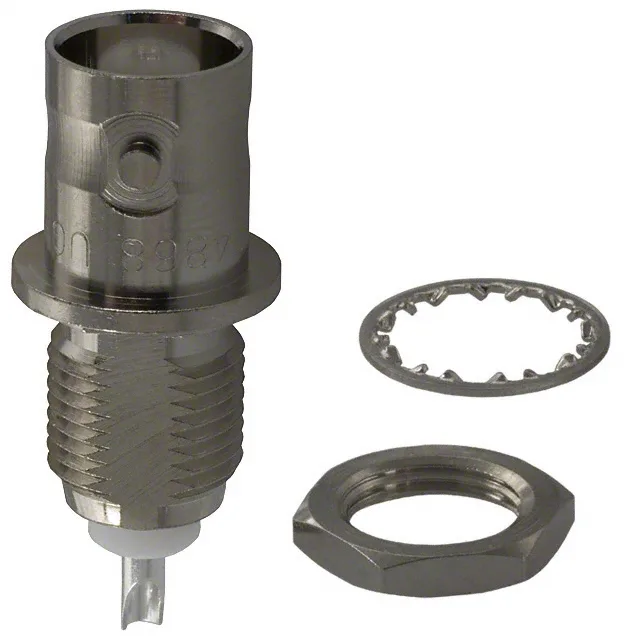
50 Ohm BNC Jack with Extended Insulation — What This Connector Is
The 31-2221: It is the extended-insulation variant of the standard 31-2211, meaning the dielectric and body are lengthened to provide additional creepage distance between the centre contact and the panel — useful when the connector passes through a grounded chassis and the signal path needs extra voltage standoff.
The nickel-plated brass body provides the RF shield ground path through the bulkhead.
Mechanical and Environmental Rating
This makes the 31-2221 a candidate for aerospace instrumentation, environmental chambers, or industrial process control where the connector sees both cold soak and hot-side exposure.
Termination and Installation
The bayonet lock provides quick quarter-turn mating with a standard BNC plug. The extended insulation feature means the rear insulator protrudes further past the mounting face than a standard BNC, so verify panel clearance before specifying — the extra length is intended for thicker panels or where the connector must stand off from the chassis ground.
How 31-2221 Differs from 31-2211
The 31-2221 is the extended-insulation version of the standard 31-2211. Both are 50 Ohm BNC jacks with the same electrical ratings (4 GHz, 0.2 dB insertion loss, 500 V), same materials (PTFE dielectric, silver-plated centre contact, nickel-plated brass body), and same mounting (bulkhead, rear-side nut). The only difference is the extended rear insulator on the 31-2221, which adds length behind the panel. If your panel thickness is standard (under 3 mm) and you have no high-voltage creepage requirement, the 31-2211 is the direct equivalent; if you need the extra standoff or are working with a thicker chassis, the 31-2221 is the correct choice.