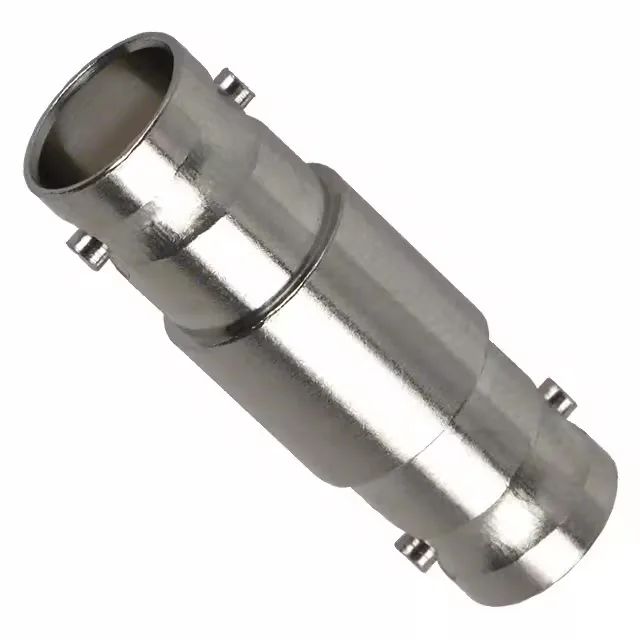
The Amphenol RF 31-70019 is a straight BNC-to-BNC adapter, jack on both ends — a female-to-female barrel coupler for joining two BNC cables or extending a run. It is a same-series adapter (BNC to BNC), not a cross-series converter, so the interface is consistent end to end. That makes it the right choice for video distribution, CCTV, broadcast video, and other 75 Ohm signal paths where a 50 Ohm barrel would create an impedance mismatch and degrade return loss. Rated to 4 GHz, the adapter covers the full bandwidth of 75 Ohm BNC systems — well past the typical 1-2 GHz ceiling of most video and telecom applications. The gold-plated phosphor bronze center contacts (female on both ends) keep corrosion at bay in repeated mate cycles, and the nickel-plated brass body gives the shell a durable, corrosion-resistant finish. The free-hanging inline mount means no panel flange or bulkhead — this barrel sits in-line on a cable run, secured by the bayonet locks on both ends.
What the 75 Ohm rating means for your signal path
If you are working in 50 Ohm RF test or telecom, this is not the barrel you want — a 75 Ohm adapter in a 50 Ohm line creates a ~25% impedance step that bounces energy back toward the source. The 31-70019 is built for 75 Ohm systems: broadcast video (SDI, HD-SDI), CCTV analog and HD, and any 75 Ohm baseband or RF link where the characteristic impedance is matched end to end. The 4 GHz bandwidth is the practical upper limit for a 75 Ohm BNC interface. Above that, the inherent geometry of the BNC interface (air gap at the dielectric interface) starts to degrade return loss. For standard-definition video or sub-1 GHz CCTV, you have plenty of headroom; for 4K/12G-SDI at 12 GHz, you need a different connector family (HD-BNC or DIN 1.0/2.3).
Construction and materials — what holds up in the field
Both ends use a bayonet lock (the standard BNC twist-and-lock), so the adapter mates and unmates quickly without tools.